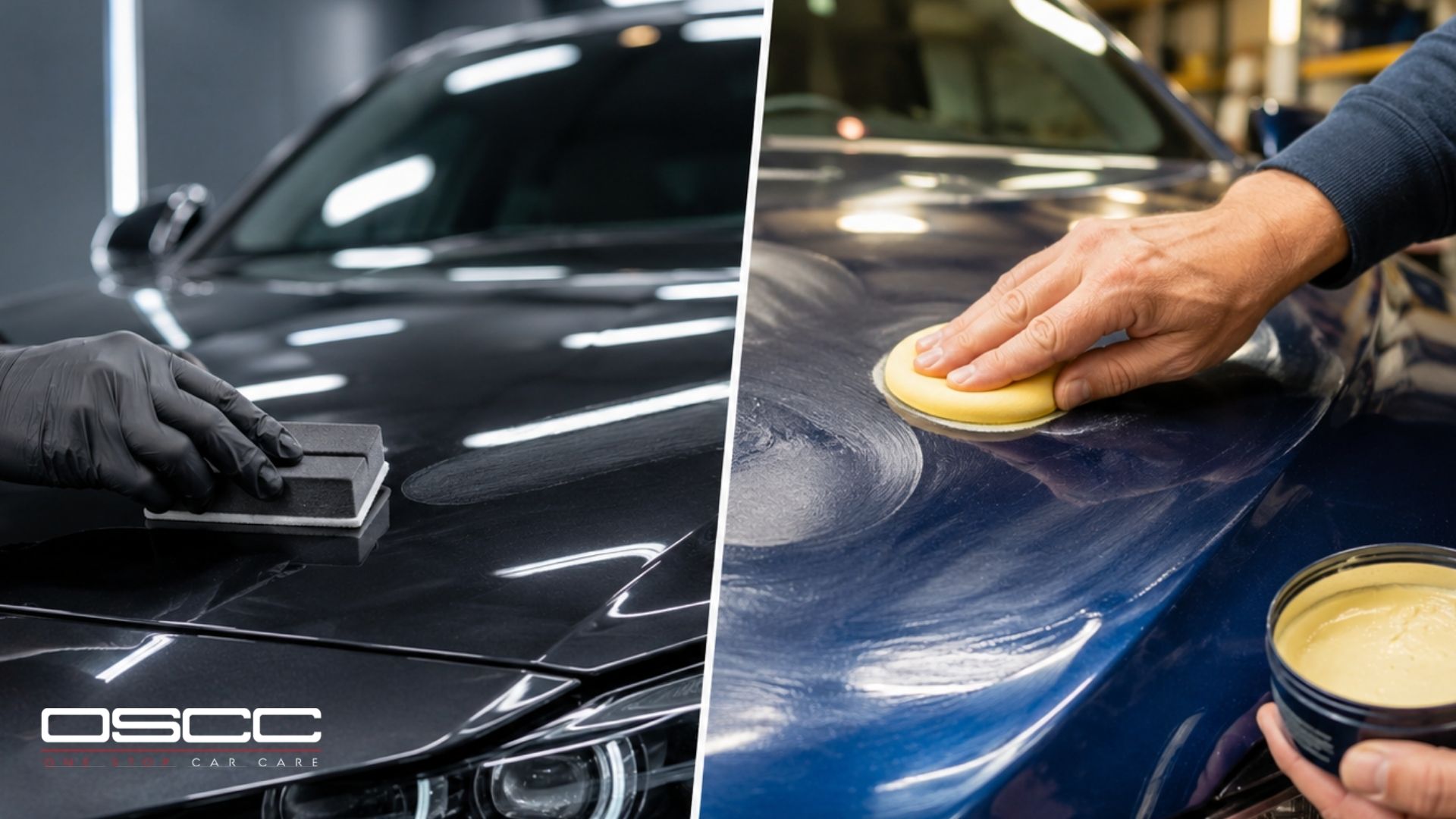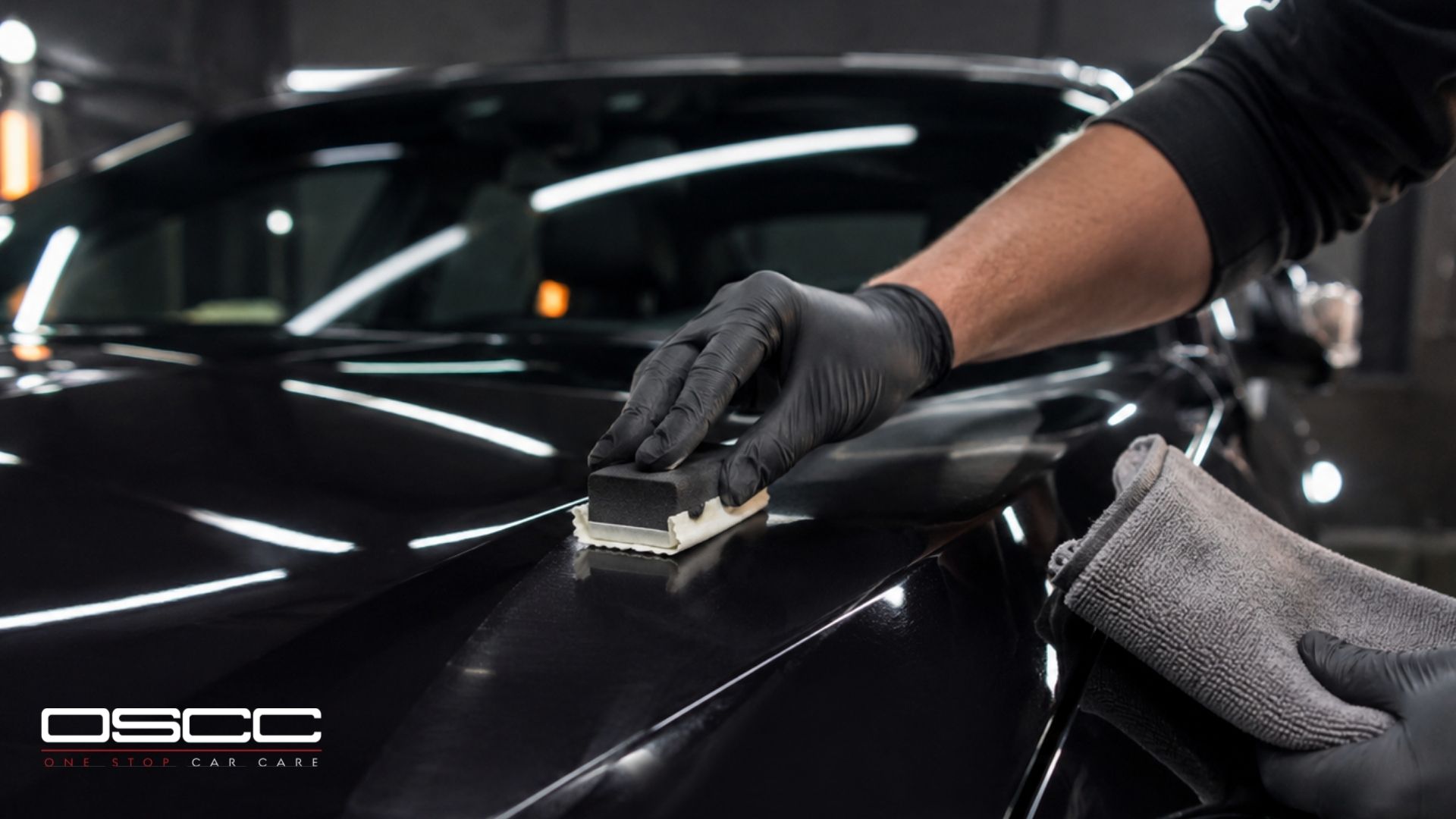
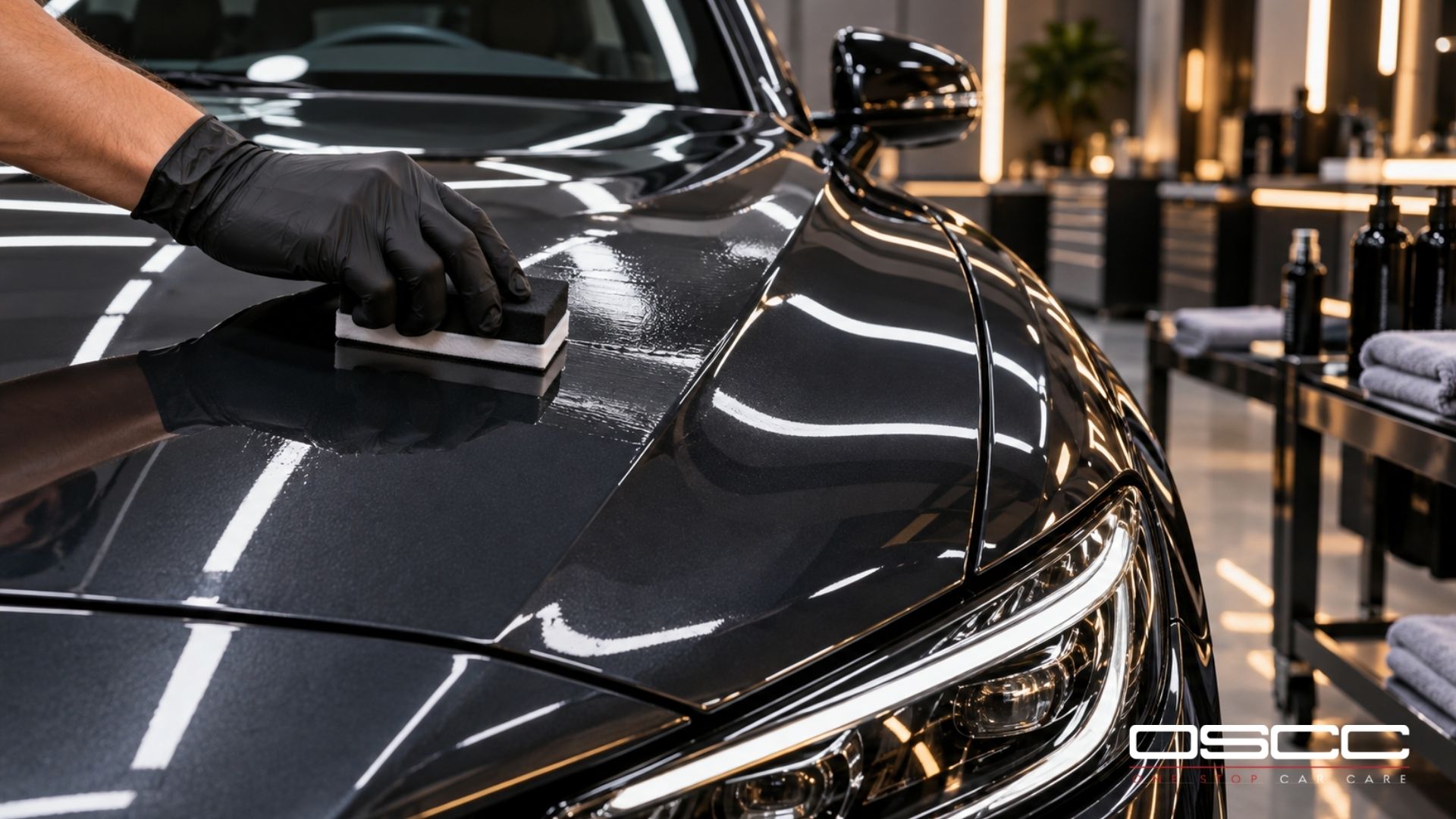
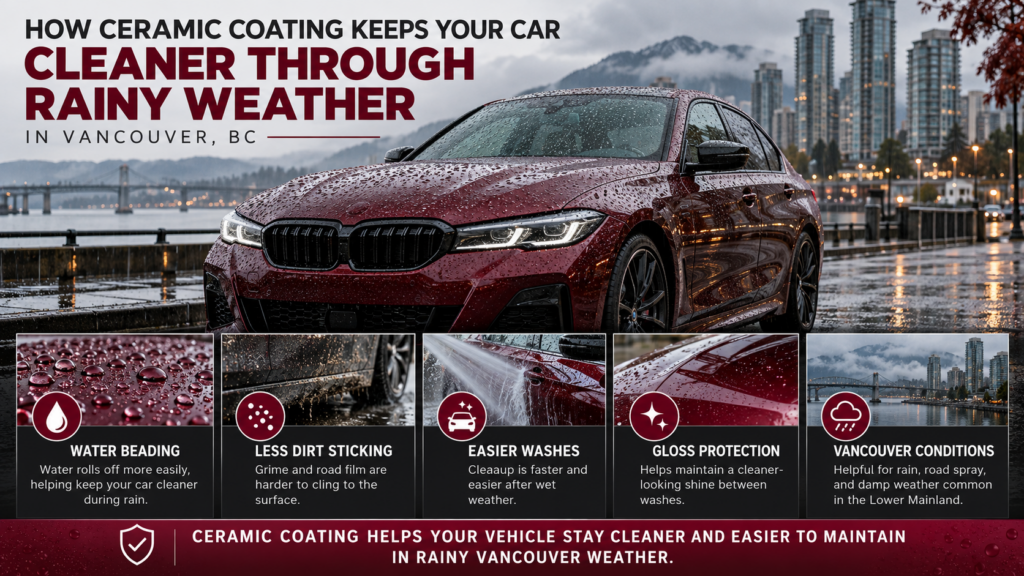
Ceramic coating helps cars stay cleaner during Vancouver’s rainy weather by creating a slick, hydrophobic surface that makes it harder for water, road grime, and other contaminants to bond strongly to the paint. A professional ceramic coating application doesn’t make a vehicle self-cleaning, but it can make the dirt left behind by frequent rain and road spray much easier to remove.
That’s particularly useful in Vancouver, where wet pavement can be a regular part of driving for long stretches of the year. Water kicked up by surrounding traffic carries grime onto lower doors, rocker panels, bumpers, and other exposed surfaces. Ceramic coating gives the paint an additional layer of protection while making routine cleanup after those wet drives less demanding.
Why Does Ceramic Coating Help a Car Stay Cleaner in the Rain?
Ceramic coating helps a vehicle stay cleaner because its slick, hydrophobic surface changes the way water and contamination interact with the paint. Instead of water spreading and lingering as readily across an untreated surface, a hydrophobic ceramic coating encourages it to form beads or move away more easily.
You’ve probably seen the tight beads that form on a properly coated hood after rain. That behaviour is useful, but the real benefit goes beyond how the water looks. When water has less tendency to remain spread across the surface, the dirt and traffic film carried with it can also have a harder time establishing a stubborn bond.
A water-repellent car coating shouldn’t be confused with something that allows rain to wash your car for you. Dirty water can still splash onto the body, and contamination will gradually accumulate. The difference often becomes more apparent when it’s time to wash the vehicle. Dirt that would otherwise require more effort to loosen can release more readily from easy-to-clean paint.
That’s an important distinction when considering ceramic coating as paint protection. The goal isn’t a car that somehow stays spotless through weeks of rain. It’s a surface that resists contamination better, stays presentable longer between washes, and is easier to bring back to a clean finish.
Why Vancouver's Rainy Weather Makes Paint Protection Important
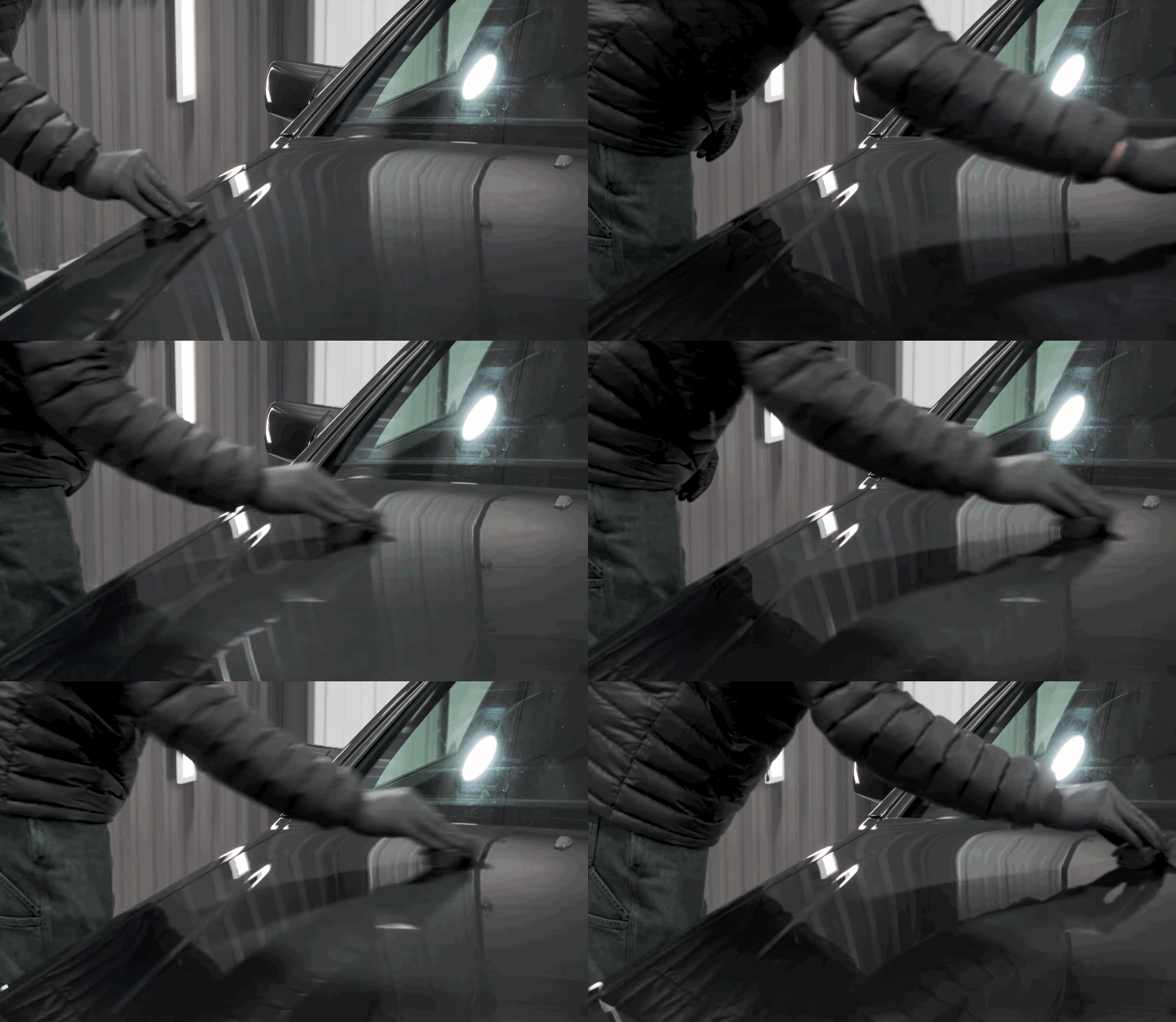
Vancouver’s frequent rain exposes vehicle paint to much more than clean water. Moisture mixes with road grime, dirt, oily traffic film, and other contaminants on the pavement, and surrounding vehicles continuously throw that mixture onto painted surfaces.
Anyone regularly travelling along Highway 1 can see how quickly the lower half of a vehicle becomes dirty during wet-weather traffic. The same problem appears in different forms around Granville Street, Kingsway, and Marine Drive, where standing water, busy traffic, construction activity, and dirty pavement can leave exterior surfaces coated with a dull film.
At One Stop Car Care in Surrey, BC, we regularly serve customers from Vancouver who want paint protection suited to the Lower Mainland’s wet driving conditions. For these drivers, ceramic coating is less about protecting a car from rain itself and more about helping the finish cope with the road grime and contamination that come with frequent wet-weather driving.
The Problem Often Appears After the Rain Stops
Once moisture evaporates, the contamination it carries doesn’t necessarily disappear with it. Road film can dry across doors and quarter panels, dirty water can leave residue around the rear of the vehicle, and repeated exposure gradually makes keeping the exterior clean more demanding.
That makes road grime protection an important part of practical vehicle paint protection in Vancouver. Ceramic coating doesn’t create an impenetrable barrier against wet-weather contamination, but it can make that contamination less stubborn when the vehicle is eventually washed.
For drivers looking for rain protection for cars, realistic expectations matter. We aren’t trying to stop a vehicle from getting dirty on a rainy Vancouver commute. We’re creating a surface that is better equipped to deal with the repeated cycle of rain, road spray, drying, and cleaning.
How Does Ceramic Coating Handle Road Spray and Grime?
Ceramic coating cannot prevent road spray from reaching your vehicle, but it can reduce how strongly grime and contamination adhere to the coated surface. That difference becomes especially useful on a daily driver that spends plenty of time around wet traffic.
A properly installed coating forms a durable protective layer over the prepared clear coat. This provides ceramic paint protection that changes the surface characteristics of the vehicle rather than simply leaving the factory clear coat to deal directly with repeated contamination.
Wet-road grime can contain several types of unwanted material:
- Dirt and mud can collect heavily around lower doors, rocker panels, wheel arches, and rear bumpers.
- Oily traffic film can create the dull, dirty layer often visible after repeated wet-weather driving.
- Fine road particles can travel with spray generated by vehicles ahead or beside you.
- Organic contamination can mix with rainwater and remain behind once the surface dries.
The coating doesn’t neutralize everything on that list, and road spray protection shouldn’t be interpreted as physical impact protection. Fine debris can still contact the vehicle, and larger stones can still chip the paint. Paint protection film is better suited to defending against that type of damage.
Where a hydrophobic coating becomes useful is during cleanup. Because paint contamination generally has more difficulty bonding strongly to the slick surface, routine washing can require less effort to remove the dirty layer that builds up after repeated wet commutes.
For someone who uses their vehicle every day, that’s a meaningful benefit. A coating won’t keep road spray off the car, but it can make dealing with the aftermath considerably easier.
Does Ceramic Coating Prevent Water Spots?
Ceramic coating can make water easier to manage, but it does not completely prevent water spots. Even a strongly hydrophobic surface can develop spotting when droplets remain on the vehicle long enough for the water to evaporate and leave minerals or other residue behind.
This is one of the areas where the appearance of a coated vehicle can create the wrong expectation. Tight, round water beads look impressive, but those beads still contain whatever was dissolved or suspended in the water. If they sit on the paint and dry, mineral deposits may remain.
At One Stop Car Care, we set realistic expectations with Vancouver drivers who visit our Surrey facility rather than presenting hydrophobic performance as a cure for every water-related issue. Ceramic coating adds protection and makes maintenance easier, but proper care still matters.
After prolonged rain or once the vehicle becomes visibly dirty, washing removes the contamination that rainwater and road spray have left behind. Proper drying is also valuable because it removes water before it has the opportunity to evaporate naturally across the surface.
Consistent coating maintenance therefore works alongside the coating itself. Hydrophobic behaviour helps manage water, while good washing and drying habits help limit the residue that water can leave behind.
Does Ceramic Coating Make Washing Easier After Rainy Weather?
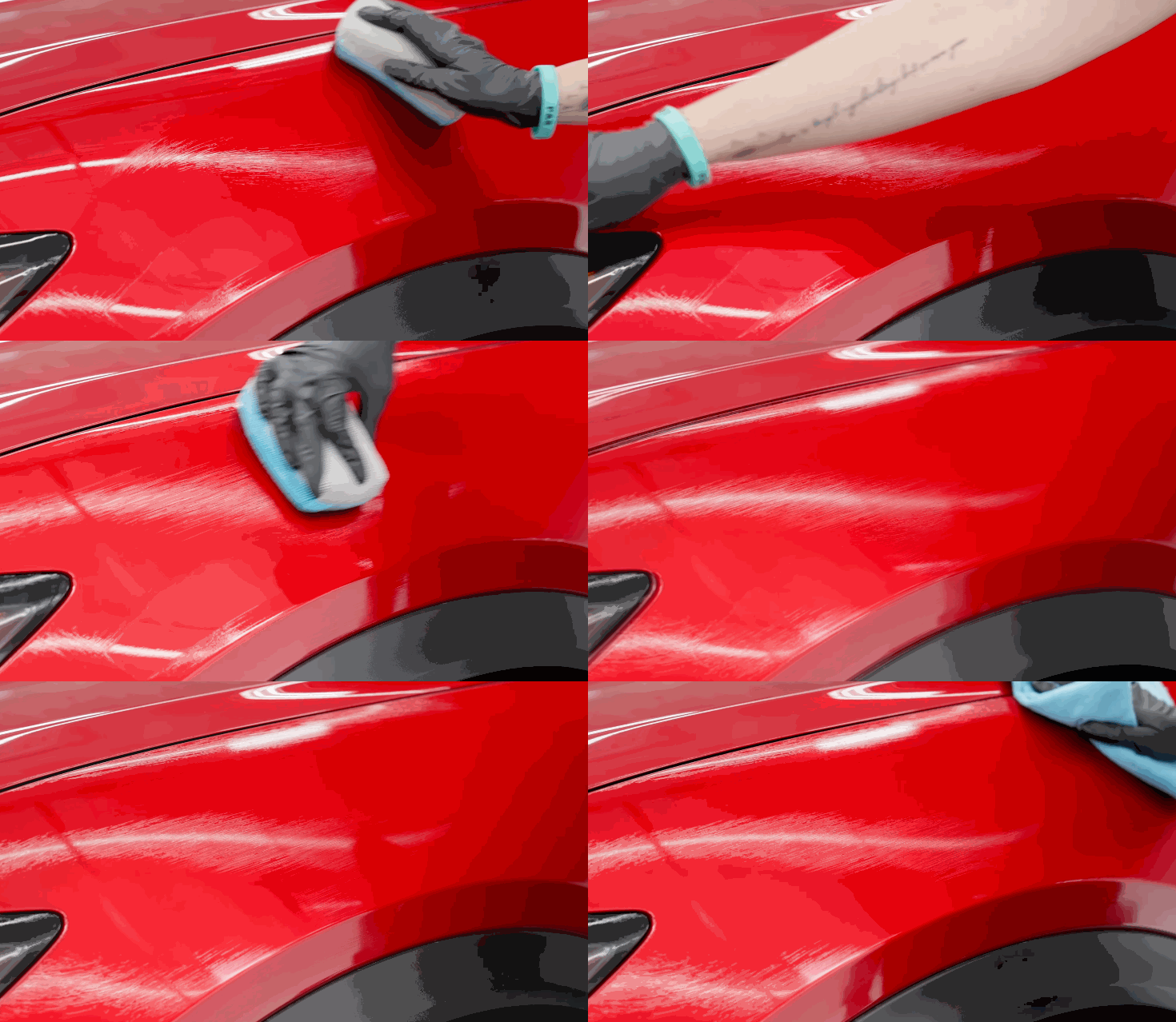
One of the most practical benefits of ceramic coating is easier washing after rainy weather because dirt and grime generally have more difficulty bonding strongly to its slick surface. For a vehicle that repeatedly gets covered in Vancouver road film, that can make regular cleaning noticeably less frustrating.
Without that slick protective surface, stubborn contamination may require more agitation to remove. More aggressive scrubbing isn’t something we want to rely on because unnecessary friction between dirty wash media and the paint can contribute to fine marring over time.
With proper ceramic coating maintenance, the goal is to let good products and safe washing techniques do most of the work. A suitable automotive shampoo can loosen contamination, while the coating’s surface properties help the dirty layer release without excessive physical effort.
That doesn’t mean every car washing after rain session becomes effortless. Heavily contaminated vehicles still need thorough cleaning, and automatic brushes, dirty wash mitts, or aggressive wiping can still introduce defects. Clean wash media, gentle techniques, and products appropriate for coated surfaces remain important parts of coated car maintenance.
For us, that’s where the value of easy car cleaning becomes most noticeable. Ceramic coating doesn’t eliminate the need to wash your vehicle. It changes how much of a fight the dirt puts up when you do.
Why Proper Ceramic Coating Application Matters in Wet Conditions
Proper ceramic coating application is essential because the coating needs clean, correctly prepared paint and suitable curing conditions to bond and perform as intended. This becomes particularly important in Vancouver, where a freshly coated vehicle may encounter rain and moisture soon after leaving the shop.
At One Stop Car Care, we treat the preparation as part of the coating itself, not as a separate task to rush through. A typical professional ceramic coating process can include:
- Thorough washing: Surface dirt, road film, and loose contamination need to be removed before anything else happens.
- Paint decontamination: Bonded contaminants that normal washing cannot remove are addressed so the coating isn’t applied over a compromised surface.
- Detailed paint inspection: The finish is checked for water spots, swirl marks, scratches, oxidation, and other imperfections.
- Paint correction when appropriate: Polishing can improve correctable clear-coat defects before they are effectively preserved beneath the coating.
- Final surface preparation: Polishing oils, residues, and other substances that could interfere with bonding are removed.
- Coating application and curing: The product is applied methodically and given the appropriate environment and time to begin curing.
A coating doesn’t hide poor paint preparation. Existing water spots, swirls, residues, and other defects may remain visible underneath it, which is why paint correction can be an important part of the process when the condition of the vehicle calls for it.
The environment after ceramic coating installation matters as well. Newly applied products require appropriate initial curing before being exposed to water, and the specific requirements depend on the coating system being used. In a rainy climate, controlled installation and proper ceramic coating curing help avoid exposing the finish prematurely and give the coating the opportunity to establish the bond it was designed to create.
How Should You Maintain Ceramic Coating During Vancouver's Rainy Months?
Ceramic coating still needs routine maintenance during Vancouver’s rainy months to preserve its hydrophobic performance and easy-clean characteristics. Frequent rain may make the vehicle look rinsed from a distance, but it doesn’t remove the traffic film and road contamination accumulating on the surface.
Don’t Wait for Heavy Grime to Build Up
Regular washing prevents layers of wet-road contamination from becoming increasingly stubborn. This is particularly useful around lower doors, rocker panels, bumpers, and the rear of the vehicle, where dirty spray tends to accumulate heavily.
Good ceramic coating care also means dealing with bird droppings and other potentially harmful contaminants promptly. A protective coating gives the clear coat another line of defence, but it doesn’t make aggressive contamination harmless.
Pay Attention to How You Wash and Dry
Use suitable automotive shampoo, clean wash media, and clean microfiber drying towels. Abrasive automatic brush washes can still drag contamination across coated paint and introduce marring, so having ceramic protection isn’t a reason to abandon safe washing practices.
Drying also deserves attention. Removing remaining water rather than allowing every droplet to evaporate naturally can help reduce mineral residue and spotting.
Weak Beading Doesn’t Always Mean the Coating Is Gone
If water stops behaving the way it did when the coating was fresh, don’t immediately assume the protection has failed. Road film and bonded surface contamination can interfere with water behaviour and mask the coating’s hydrophobic characteristics.
Proper cleaning or decontamination may restore that performance. Consistent ceramic coating maintenance is therefore especially relevant to winter car care in Vancouver, when repeated wet-road exposure can leave a substantial layer of contamination on a daily driver.
Conclusion: Can Ceramic Coating Keep Your Car Cleaner in Vancouver Rain?
Yes, ceramic coating can help your car stay cleaner through Vancouver’s rainy weather by reducing how strongly water, grime, traffic film, and other contaminants bond to the paint. It won’t prevent the vehicle from getting dirty, but it can make the contamination left behind by wet roads easier to remove.
That distinction matters in a city where rain and wet pavement are regular parts of vehicle ownership. Road spray can repeatedly cover lower panels, moisture can leave deposits as it dries, and year-round driving means the exterior rarely gets a long break from environmental exposure. Ceramic coating gives the paint an additional protective surface while making routine cleaning more manageable.
It still isn’t a replacement for washing, careful drying, or physical impact protection. What it offers is a more practical way to maintain painted surfaces through the repeated cycle of rain, grime, washing, and everyday use.
At One Stop Car Care in Surrey, BC, we serve customers from Vancouver who want professional paint protection suited to the Lower Mainland’s wet conditions. We can assess your paint, recommend the preparation it actually needs, and help determine whether ceramic coating fits the way you use your vehicle. Contact us today to schedule a professional ceramic coating application at our Surrey facility and get a protection plan tailored to your car and driving habits.
One Stop Car Care

Car detailing service in Surrey, Canada
Address:
2320 King George Blvd #1, Surrey, BC V4A 5A5, Canada
Phone:
+1 604-338-4336
Questions & answers:
Be the first to ask a question