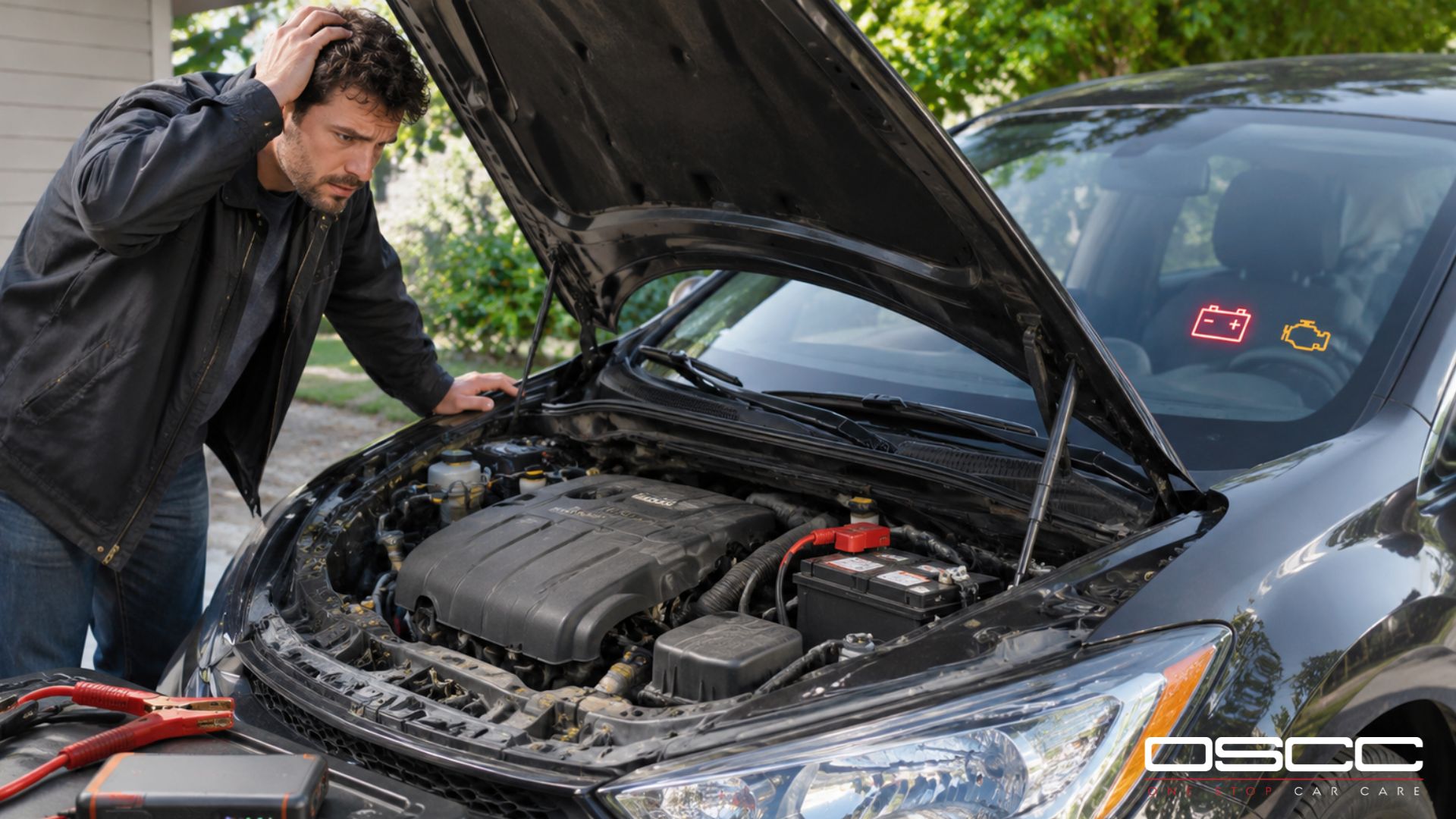
A car that won’t start may have a dead battery, a faulty starter, a charging system problem, or an issue with fuel delivery or ignition. The quickest way to narrow down the cause is to pay attention to what happens when you turn the key or press the start button.
Does the engine crank normally but refuse to run? Do you hear a rapid clicking sound? Or does the dashboard remain completely dark? Each symptom points toward a different group of potential problems.
For drivers in Surrey, BC, frequent rain, cool temperatures, and regular stop-and-go commuting can make certain starting problems more noticeable. Understanding the warning signs can help you decide what to check safely before arranging professional vehicle diagnostics.
What Should You Check First When Your Car Won't Start?
Before assuming your vehicle needs an expensive repair, check a few basic things. Many no-start situations have straightforward explanations, and identifying the symptoms can save time during troubleshooting.
Start with these five checks:
- Look at the dashboard lights. Dim or completely inactive lights may indicate a discharged battery or poor electrical connection.
- Listen when starting the engine. Clicking, slow cranking, or complete silence can help distinguish electrical problems from other faults.
- Confirm the gear position. Automatic vehicles generally need to be in Park or Neutral before the engine will start.
- Check the fuel level. An inaccurate fuel gauge or unexpectedly empty tank can sometimes explain why the engine cranks without starting.
- Watch for security warnings. A flashing immobilizer symbol or key-related message may indicate that the vehicle isn’t recognizing its key.
Avoid repeatedly cranking the engine for extended periods. Doing so can drain the battery further and place unnecessary strain on the starter. If you notice smoke, a strong fuel smell, or unusual electrical behaviour, stop attempting to start the vehicle and arrange professional assistance.
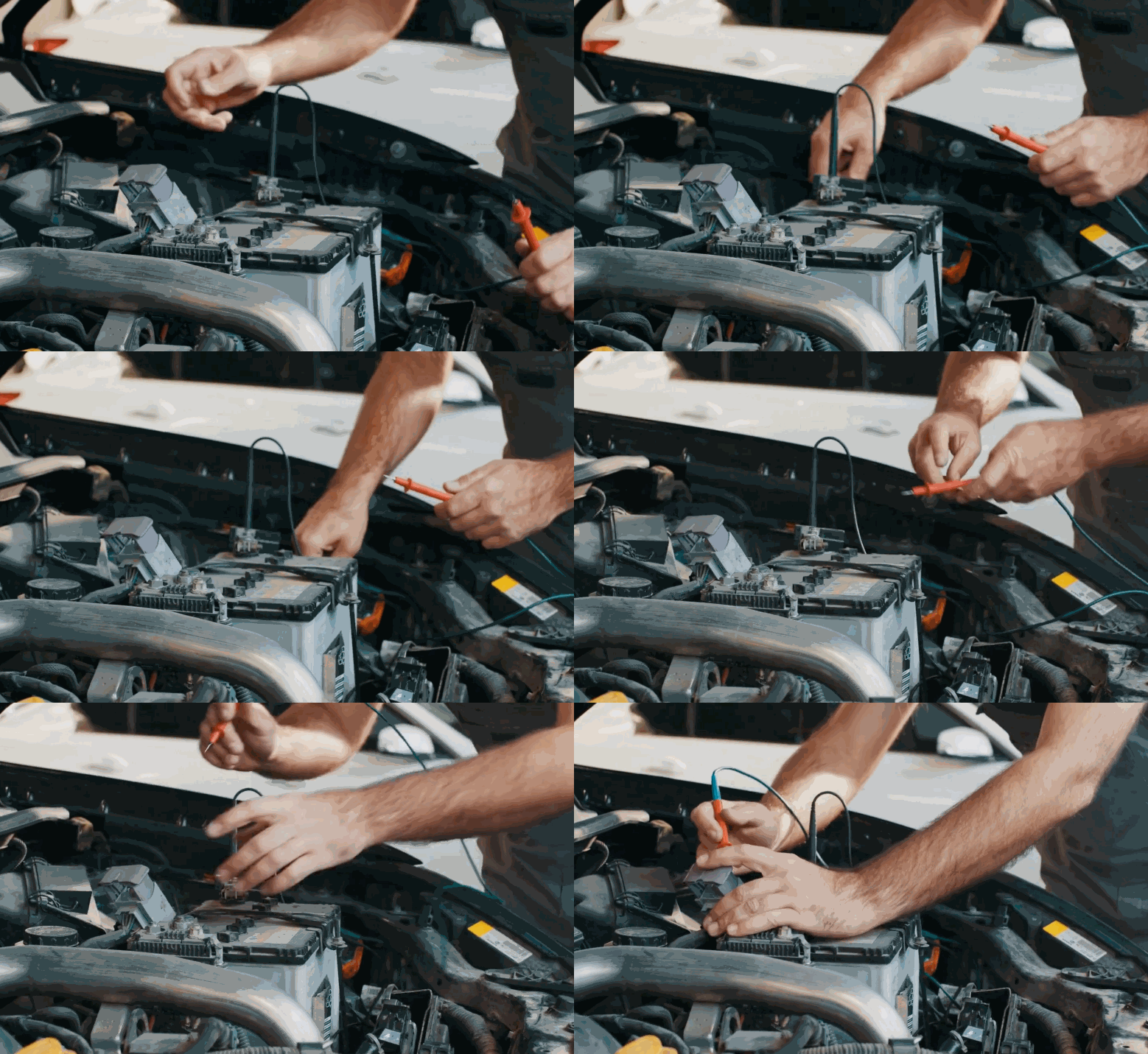
1. Dead or Weak Car Battery
A dead or weak battery is one of the most common reasons a car won't start. Without sufficient electrical power, the starter motor may be unable to turn the engine fast enough to begin combustion.
Typical symptoms include slow cranking, rapid clicking, dim headlights, or dashboard lights that flicker when you attempt to start the vehicle.
Explore Common Battery Warning Signs
Select each symptom to understand what it may indicate.
↻ Slow Cranking ⌄
! Rapid Clicking ⌄
◉ Dim Headlights ⌄
⚡ Flickering Dashboard Lights ⌄
Batteries naturally lose capacity as they age. Short trips, extended parking, electrical accessories, and temperature changes can also contribute to a low state of charge.
What Should You Check?
Inspect the battery terminals for visible corrosion or loose connections without touching damaged wiring. If the battery appears discharged, a properly performed jump-start may get the engine running, provided the vehicle manufacturer permits it.
However, a successful jump-start doesn't confirm that the battery itself is defective. A charging system issue or electrical drain could be responsible. Battery testing can help determine whether it needs recharging, replacement, or further diagnosis.
2. Faulty Starter Motor
A faulty starter motor can prevent the engine from cranking even when the battery has enough power. The starter is responsible for turning the engine during the initial starting process.
One common warning sign is a single click when you turn the key, followed by no engine movement. In other cases, the starter may operate intermittently or produce an unusual grinding sound.
What Happens When You Try to Start?
Choose the symptom that best matches what you're experiencing.
Single Click, No Cranking
A single click followed by no engine movement can occur when the starter does not engage or operate properly. However, low voltage or poor cable connections can produce similar symptoms.
What to check: Battery voltage, cable connections, starter relay operation, and the starter circuit may require testing before components are replaced.
A clicking noise alone doesn't prove the starter has failed. Low battery voltage, corroded connections, damaged cables, or a starter relay problem can produce similar symptoms.
At One Stop Car Care (OSCC) , we recommend identifying the actual electrical fault before replacing components. A proper diagnostic inspection can help distinguish a failed starter from a power supply or control circuit issue.
3. Alternator or Charging System Problems
A failing alternator can leave your vehicle unable to start because the battery isn’t receiving enough charge while the engine runs. Although the alternator usually doesn’t start the engine directly, it helps maintain the battery’s electrical supply.
Unlike a battery that has simply reached the end of its service life, charging system problems may produce warning signs while you’re driving.
These can include:
- A battery warning light appearing on the dashboard.
- Headlights that become unusually dim or fluctuate in brightness.
- Electrical accessories behaving inconsistently.
- A battery that repeatedly loses its charge after being recharged.
The alternator isn’t always the only possible cause. A damaged drive belt, poor electrical connection, or charging control issue can also affect battery charging.
A charging system test can establish whether the alternator is producing the expected output and whether the battery is receiving adequate power.
4. Corroded or Loose Battery Connections
Corroded or loose battery connections can prevent a car from starting even when the battery itself is in good condition. The starter requires a substantial amount of electrical current, and excessive resistance at a terminal or cable can interrupt that supply.
Corrosion often appears as a white, bluish, or greenish buildup around battery terminals. Loose clamps, damaged cables, and poor ground connections can create similar starting difficulties.
This issue deserves particular attention in the Lower Mainland, where persistent moisture can contribute to corrosion around exposed electrical connections.
What Should You Check?
Look for visible corrosion, damaged insulation, or battery terminals that appear improperly secured. Avoid handling leaking, swollen, or otherwise damaged batteries.
Battery terminal cleaning and connection repairs should follow appropriate safety procedures. For modern vehicles, electrical inspections may also involve checking voltage drop across the cables to identify resistance that isn’t obvious from a visual inspection.
At OSCC, electrical troubleshooting can help determine whether the problem originates with the battery, its connections, or another part of the starting circuit.
5. Fuel Delivery Problems
Fuel delivery problems can cause an engine to crank normally without actually starting. The starter may be working correctly, but the engine still needs an appropriate supply of fuel to run.
How Fuel Reaches the Engine
Potential causes include a malfunctioning fuel pump, a failed fuel pump relay, a restricted fuel supply, or an issue with the fuel injection system.
Explore Potential Fuel Delivery Problems
Select each component to understand how a malfunction may affect engine starting.
01 Fuel Pump ⌄
02 Fuel Pump Relay ⌄
03 Restricted Fuel Supply ⌄
04 Fuel Injection System ⌄
One important clue: The engine turns over at its usual speed but never begins running. Some vehicles may also experience hesitation, stalling, or difficulty starting before the problem becomes more severe.
What Should You Check?
First, confirm that the vehicle has fuel. Don't rely entirely on the gauge if its reading seems questionable.
You may hear a brief fuel pump priming sound when switching the ignition on, depending on the vehicle. However, the presence or absence of that sound isn't enough to diagnose the pump.
Important safety note: Fuel systems can operate under high pressure, so opening fuel lines or attempting improvised repairs isn't recommended.
If the engine cranks but won't start, professional diagnostics can help determine whether the issue involves fuel pressure, pump operation, or engine management.
6. Worn Spark Plugs or Ignition System Problems
Worn spark plugs or faulty ignition components can prevent a gasoline engine from starting because the air-fuel mixture needs a properly timed spark to ignite. When that spark is weak, inconsistent, or missing, the engine may crank without running.
Spark plugs gradually wear with use, but starting problems can also come from ignition coils, wiring, or electronic controls. These faults sometimes develop gradually rather than causing an immediate no-start condition.
Warning signs may include rough idling, engine misfires, hesitation during acceleration, or an illuminated check engine light before the vehicle stops starting altogether.
A single worn spark plug is more likely to cause rough running than a complete no-start condition. When the engine won’t start at all, technicians may need to investigate whether multiple cylinders are affected or whether a shared ignition component has failed.
Checking the vehicle’s maintenance history is a useful starting point. If spark plug replacement is overdue, an ignition system inspection may help identify the problem without unnecessarily replacing unrelated parts.
7. Faulty Crankshaft or Camshaft Position Sensor
A faulty crankshaft or camshaft position sensor can prevent an engine from starting because the engine control module relies on these signals to manage ignition timing and fuel injection.
The crankshaft position sensor monitors engine rotation and position, while the camshaft position sensor helps the control system determine valve timing and cylinder position. Depending on the vehicle, a missing or inaccurate signal can interrupt normal engine operation.
Symptoms Worth Paying Attention To
A failing sensor may produce several warning signs before a complete no-start condition develops:
- The engine cranks normally but refuses to start.
- The vehicle stalls unexpectedly while driving.
- Starting becomes inconsistent, particularly after the engine warms up.
- The check engine light appears with a relevant diagnostic trouble code.
These symptoms aren’t exclusive to position sensor failures. Wiring faults, electrical supply problems, and other engine management issues can produce similar behaviour.
At OSCC, we recommend checking diagnostic trouble codes and live sensor data before replacing components. A trouble code identifies an area that needs investigation, but it doesn’t automatically prove that the sensor itself has failed.
8. Key Fob or Immobilizer Problems
A key fob or immobilizer problem can prevent a vehicle from starting when its security system cannot recognize an authorized key. Modern vehicles use electronic communication between the key and the vehicle to permit engine operation.
How the Vehicle Recognizes Your Key
The vehicle's security system must recognize an authorized key before allowing engine operation. Depending on the vehicle, an issue with the key fob, immobilizer, programming, or electronic communication can prevent a successful start.
Sometimes the issue is as simple as a weak key fob battery. In other cases, the problem may involve the immobilizer system, key programming, or an electronic communication fault.
Three Things to Check Before Seeking Repairs
Expand each step to review a practical starting-system check.
01 Check for a Weak Key Fob Battery ⌄
02 Follow the Emergency Starting Procedure ⌄
03 Try an Available Spare Key ⌄
Important: A starting problem involving key recognition does not automatically mean the immobilizer itself has failed. A weak fob battery, programming issue, or electronic communication fault may require further diagnosis.
Always Follow the Manufacturer's Instructions
Remember that the emergency procedure varies by manufacturer. Consult the owner's manual rather than repeatedly pressing the start button or attempting to bypass the security system.
9. Faulty Ignition Switch or Start Button
A faulty ignition switch or start-button circuit can prevent the vehicle from sending the correct starting command, even when the battery and starter motor are functional.
On traditional key-operated vehicles, a worn ignition switch may cause intermittent electrical operation or prevent the starter circuit from activating. Push-button systems rely on electronic switches, brake pedal inputs, control modules, and other components to authorize starting.
A few details can help narrow down the issue:
- Check the brake pedal input. Some push-button vehicles won’t start if the brake pedal switch isn’t registering correctly.
- Confirm the transmission position. Try restarting with the transmission securely in Park, following the manufacturer’s instructions.
- Observe dashboard behaviour. If accessories turn on but the engine doesn’t crank, the problem may involve the starting control circuit.
- Check for security messages. Immobilizer or key recognition problems can resemble a faulty start button.
Electrical testing is usually necessary to distinguish a defective switch from a relay, wiring, or control module issue.
10. Blown Fuse, Relay, or Electrical System Fault
A blown fuse, defective relay, or damaged electrical circuit can interrupt power to components needed for starting. Depending on the affected circuit, the vehicle may fail to crank or may crank without starting.
Starting systems rely on several electrical connections working together. A problem involving the starter relay, engine control module power supply, fuel pump circuit, or associated wiring can interrupt that process.
Some electrical faults are relatively straightforward, while others require more detailed troubleshooting. For example, a fuse that repeatedly blows may indicate an underlying short circuit rather than a fuse that simply needs replacement.
You can check the owner’s manual to identify relevant fuse locations and inspect accessible fuses when it is safe to do so. Never install a fuse with a higher amperage rating or bypass a protective circuit.
If a replacement fuse blows again, further diagnosis is necessary. Repeated electrical failures should be investigated rather than temporarily worked around.
Conclusion: What Should You Do When Your Car Won't Start?
When your car won't start, the first step is to identify whether the engine cranks, clicks, turns slowly, or remains completely unresponsive. Those symptoms can help narrow down possible causes, from a weak battery or poor electrical connection to starter, fuel delivery, ignition, or engine management problems.
What Happens When You Try to Start Your Car?
Select the symptom that best describes your vehicle. These clues may help identify which systems require testing.
Engine Cranks but Won't Start
If the engine turns over at its usual speed but never starts running, the problem may involve fuel delivery, ignition, engine management, or another starting-related system.
Next step: A diagnostic inspection can help identify which system is preventing normal engine operation.
Not every no-start condition requires a major repair. However, replacing parts without confirming the cause can become expensive and may leave the original problem unresolved.
Basic checks can help you recognize an obvious issue, but persistent starting problems are best addressed through proper diagnostics. Understanding what your vehicle is doing, and what it isn't doing, gives a technician valuable information before testing begins.
Need Help With a Car That Won't Start?
For drivers in Surrey, BC, One Stop Car Care's team at OSCC can help assess vehicle maintenance needs and determine appropriate next steps for starting or electrical concerns.
Contact us to discuss your vehicle's symptoms and available inspection services before an intermittent problem leaves you stranded.
Contact One Stop Car Care →One Stop Car Care

Car detailing service in Surrey, Canada
Address:
2320 King George Blvd #1, Surrey, BC V4A 5A5, Canada
Phone:
+1 604-338-4336
Questions & answers:
Be the first to ask a question