Ceramic coating is generally the better choice for Surrey drivers who want longer-lasting paint protection and easier maintenance, while wax can still be a practical option for owners who prefer a lower upfront cost and enjoy detailing their vehicles regularly. A professional ceramic coating application creates a stronger bond with properly prepared paint, whereas automotive wax leaves behind a more temporary protective layer that needs to be renewed more frequently.
That difference becomes especially relevant in Surrey, where frequent rain, dirty road spray, seasonal contamination, and year-round driving keep vehicle finishes exposed to the elements. Both products have value, but the right choice comes down to how much durability you expect, how often you want to maintain the protection, and how your vehicle is actually used.
What Is the Difference Between Ceramic Coating and Car Wax?
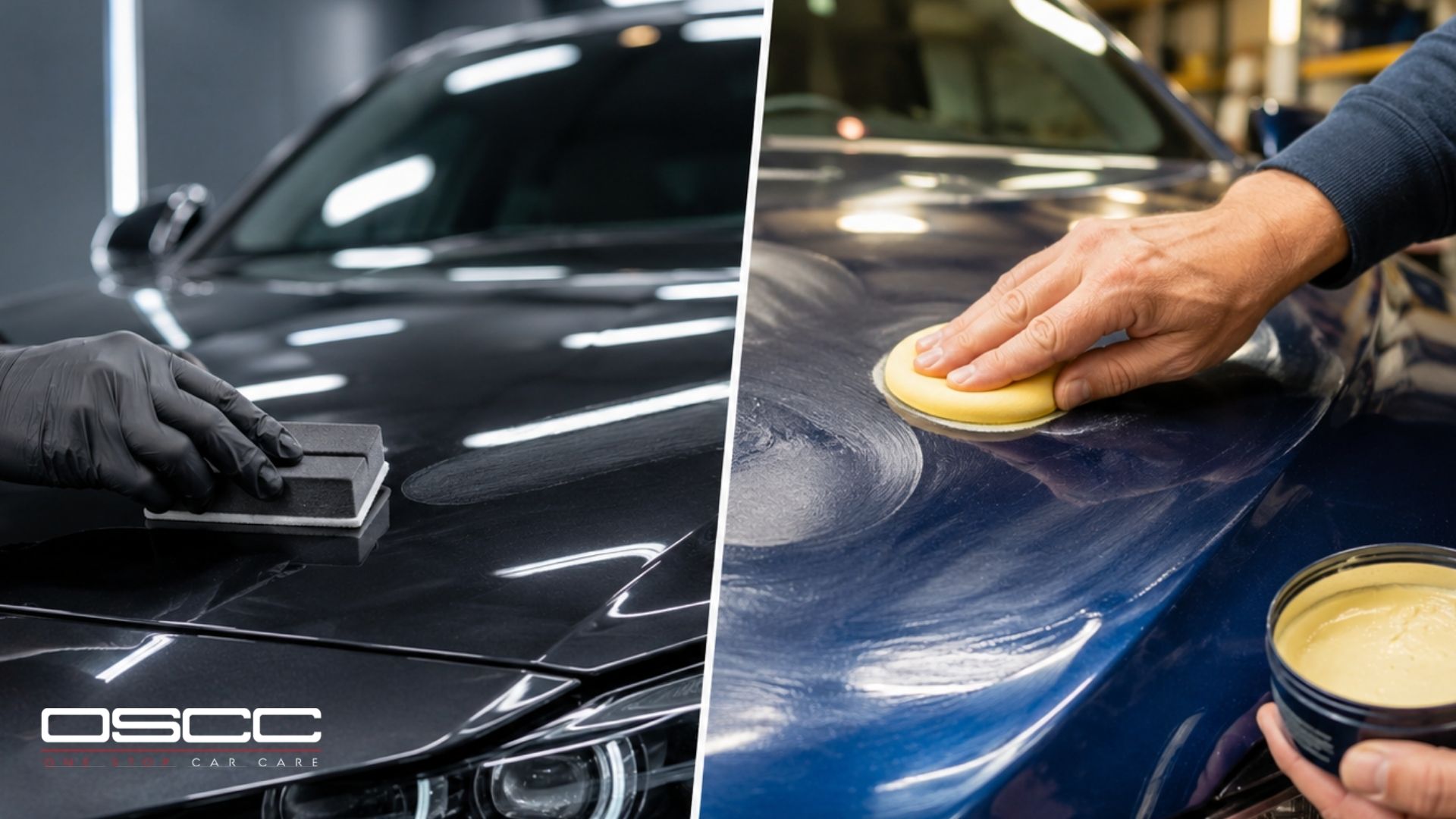
Ceramic coating and wax both add protection to automotive paint, but they work differently in terms of bonding, durability, and ongoing maintenance. Wax primarily sits on top of the clear coat as a temporary sacrificial layer, while ceramic coating forms a more durable bond with a properly prepared surface.
Traditional car wax has remained popular for good reason. It can enhance gloss, improve water behaviour, and add a temporary barrier between the clear coat and everyday contamination. For someone who enjoys spending a weekend detailing their car and doesn’t mind regular reapplication, that simplicity can be part of the appeal.
Ceramic coating takes a different approach. Once properly applied and cured, it creates a harder and more chemically resistant surface that is designed to withstand routine washing and environmental exposure for much longer than conventional wax.
Protection Is Not the Same as Impact Resistance
This distinction matters when discussing ceramic coating vs wax. Both can contribute to vehicle paint protection by helping the clear coat resist environmental exposure, but neither creates a thick physical shield.
A stone striking the hood at highway speed can still chip coated or waxed paint. A deep scratch can still penetrate the finish. For those types of impacts, paint protection film is a more appropriate solution.
Where ceramic coating separates itself is in durability and resistance to everyday contamination. Wax offers useful short-term paint protection, while ceramic coating is designed for drivers looking for a longer-term surface treatment with less frequent reapplication.
How Long Does Ceramic Coating Last Compared With Wax?
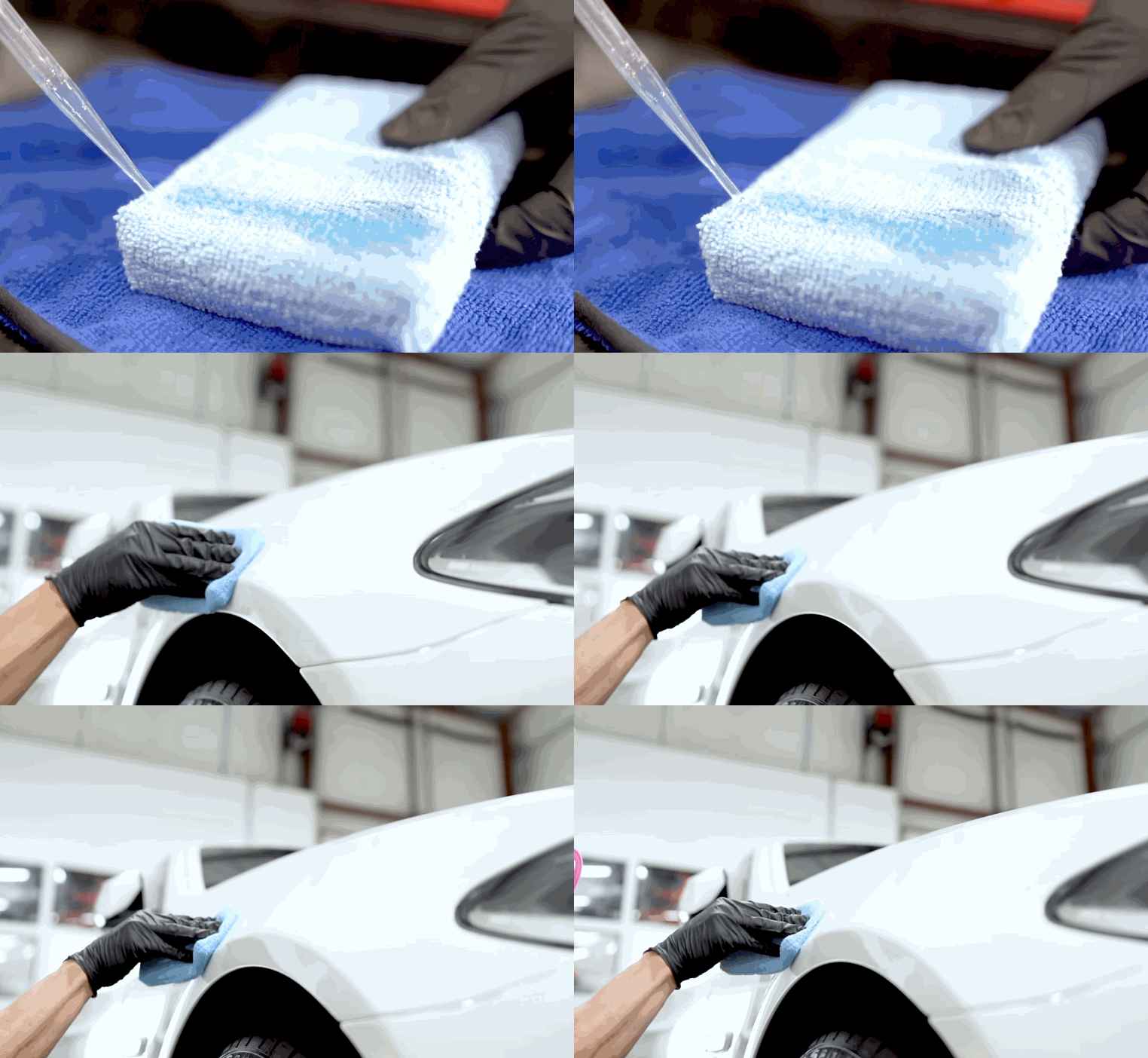
A professionally applied ceramic coating typically lasts substantially longer than traditional automotive wax. However, ceramic coating durability should never be reduced to a guaranteed number of months or years because preparation, product quality, driving conditions, washing habits, and ongoing care all influence how long the protection performs effectively.
Wax operates on a much shorter cycle. Repeated washing, rain, heat, road contamination, and environmental exposure gradually wear down the protective layer, which means regular reapplication is necessary to maintain its water behaviour and protective qualities.
At One Stop Car Care, we prefer to set realistic expectations about longevity instead of treating every vehicle the same. A garage-kept weekend vehicle and a daily commuter covering thousands of kilometres through Surrey won’t necessarily experience identical coating performance, even if they received the same product.
The main factors affecting longevity include:
- Quality and formulation of the coating or wax.
- Condition and preparation of the paint before application.
- Kilometres driven and frequency of vehicle use.
- Exposure to weather and environmental contamination.
- Washing methods and products used afterward.
- Consistency of coating maintenance.
This is where the difference in wax longevity becomes particularly noticeable. Wax can work very well for owners who are comfortable refreshing protection regularly. Ceramic coating is generally better suited to someone seeking long-term paint protection without repeatedly starting the protection process from scratch.
Which Handles Surrey Rain and Road Grime Better?
Ceramic coating generally has the practical advantage over wax when a vehicle is regularly exposed to Surrey’s rain, road spray, and accumulated grime. Its strong hydrophobic properties help water move across the surface more readily and make many contaminants less stubborn during routine cleaning.
That matters on local roads. Highway driving along Highway 1 or Highway 99 can coat lower panels and rear surfaces in dirty spray during wet conditions. Regular travel on King George Boulevard or Fraser Highway adds urban traffic, construction activity, dust, and road film to the equation.
A hydrophobic ceramic coating doesn’t stop those contaminants from reaching the vehicle. What it can do is change how strongly many of them adhere to the surface. When the vehicle eventually needs washing, less aggressive cleaning may be required to remove accumulated grime.
At One Stop Car Care, that’s one of the reasons we see ceramic coating as particularly practical for Surrey vehicles that are driven throughout the year. Effective road grime protection isn’t about expecting a car to stay spotless in bad weather. It’s about making the contamination it inevitably collects easier to manage.
Hydrophobic Does Not Mean Self-Cleaning
Water beading is one of the most noticeable characteristics of a Surrey ceramic coating, but it’s important not to mistake impressive beading for zero maintenance. Rainwater can still contain contaminants, and mineral deposits may remain when water is allowed to dry on the surface.
Regular washing remains necessary. The difference is that ceramic coating can make that routine less demanding while providing useful weather protection for cars exposed to Surrey’s wet conditions month after month.
Does Ceramic Coating Protect Paint Better Than Wax?
Ceramic coating generally provides stronger and longer-lasting resistance to environmental contamination than wax, but neither product makes automotive paint immune to physical damage. The advantage of ceramic coating is primarily its durability and ability to maintain a protective surface through conditions that cause conventional wax to deteriorate more quickly.
Both products can help create separation between the clear coat and everyday exposure, but their resistance differs depending on the contaminant.
- UV exposure: Both can provide some degree of protection, while a durable coating maintains that protective layer for longer between applications.
- Bird droppings and bug residue: Ceramic coating offers stronger chemical resistance, although both contaminants should still be removed promptly.
- Water spots: Hydrophobic properties can reduce how much water remains on the surface, but neither product completely prevents mineral spotting.
- Oxidation: Maintaining a protective layer helps reduce direct environmental exposure that contributes to deterioration over time.
- Chemical contamination: Ceramic paint protection generally offers greater resistance than conventional wax protection.
There are limits to that clear coat protection. Neither product is designed to absorb stone impacts, prevent deep scratches, or stop significant abrasion. Drivers whose main concern is rock chips and physical damage should consider paint protection film, particularly for vulnerable front-facing panels.
The strongest reason to choose ceramic coating over wax isn’t a promise that nothing can damage the paint. It’s the combination of longer-lasting environmental and UV protection, easier maintenance, and a protective surface that doesn’t need to be reapplied nearly as often as traditional wax.
Is Ceramic Coating Easier to Maintain Than Wax?
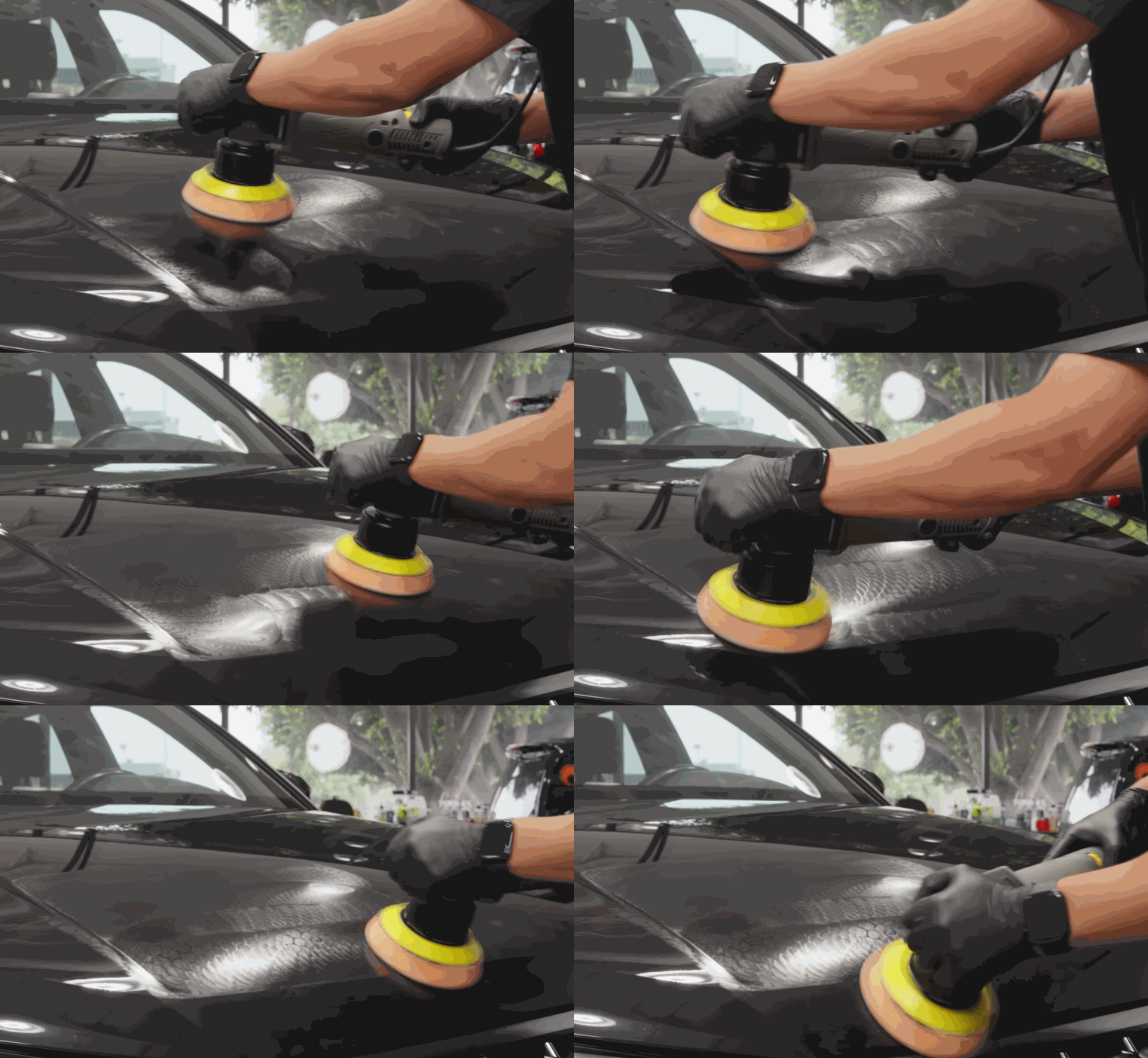
Ceramic coating generally requires less frequent reapplication than wax, but it doesn’t eliminate regular washing or proper paint care. The biggest maintenance advantage is that you’re preserving an existing protective layer rather than repeatedly applying a new one every time the previous protection wears down.
With traditional car wax maintenance, protection needs to be refreshed periodically as washing and environmental exposure gradually weaken the wax layer. For people who enjoy detailing their own vehicles, that routine may actually be part of the ownership experience. Applying wax gives them an opportunity to inspect the paint, work on the finish, and restore that freshly detailed appearance.
Ceramic coating maintenance works differently. Once the coating has properly cured, regular washing becomes the priority. Its surface slickness and hydrophobic behaviour help prevent dirt and road film from bonding as stubbornly, contributing to easy-to-clean paint without requiring a fresh coating after every few washes.
That doesn’t mean washing technique becomes irrelevant. Automatic brush washes can still drag abrasive contamination across the finish, and dirty wash mitts or towels can introduce swirl marks to either coated or waxed paint. Good ceramic coating care still means using clean wash media, suitable automotive products, and gentle drying methods.
For many daily drivers, that’s where the convenience becomes noticeable. Ceramic coating doesn’t remove maintenance from vehicle ownership. It can simply make keeping the paint clean and protected a more manageable routine.
Is Ceramic Coating Worth the Higher Upfront Cost?
Ceramic coating can justify its higher upfront cost for drivers who value durability, less frequent reapplication, easier cleaning, and longer-term vehicle ownership. Wax can offer better value when the priority is minimizing the initial expense or maintaining the vehicle through frequent hands-on detailing.
Looking only at the initial ceramic coating cost versus car waxing cost doesn’t tell the entire story. The more useful comparison is what each option requires during the period you intend to keep the vehicle.
When Ceramic Coating Offers More Value
A driver who uses the vehicle daily and plans to keep it for several years may place greater value on a protective treatment that doesn’t need frequent reapplication. Easier washing can also matter when the vehicle regularly picks up Surrey road grime and needs cleaning throughout the year.
When Wax May Be Enough
Wax remains a sensible choice for someone who enjoys detailing frequently, owns a vehicle that sees limited use, or simply wants temporary protection without committing to a larger initial investment. Not every owner needs the longest-lasting option available.
At One Stop Car Care, we prefer to look at the condition of the vehicle, ownership plans, maintenance habits, and expectations before recommending one approach over another. Ceramic coating value is highest when its durability and convenience solve problems the owner actually cares about.
Ultimately, long-lasting paint protection isn’t automatically better value simply because it lasts longer. The best value comes from choosing a product whose performance and maintenance requirements fit the way you use your vehicle.
Why Professional Ceramic Coating Application Matters
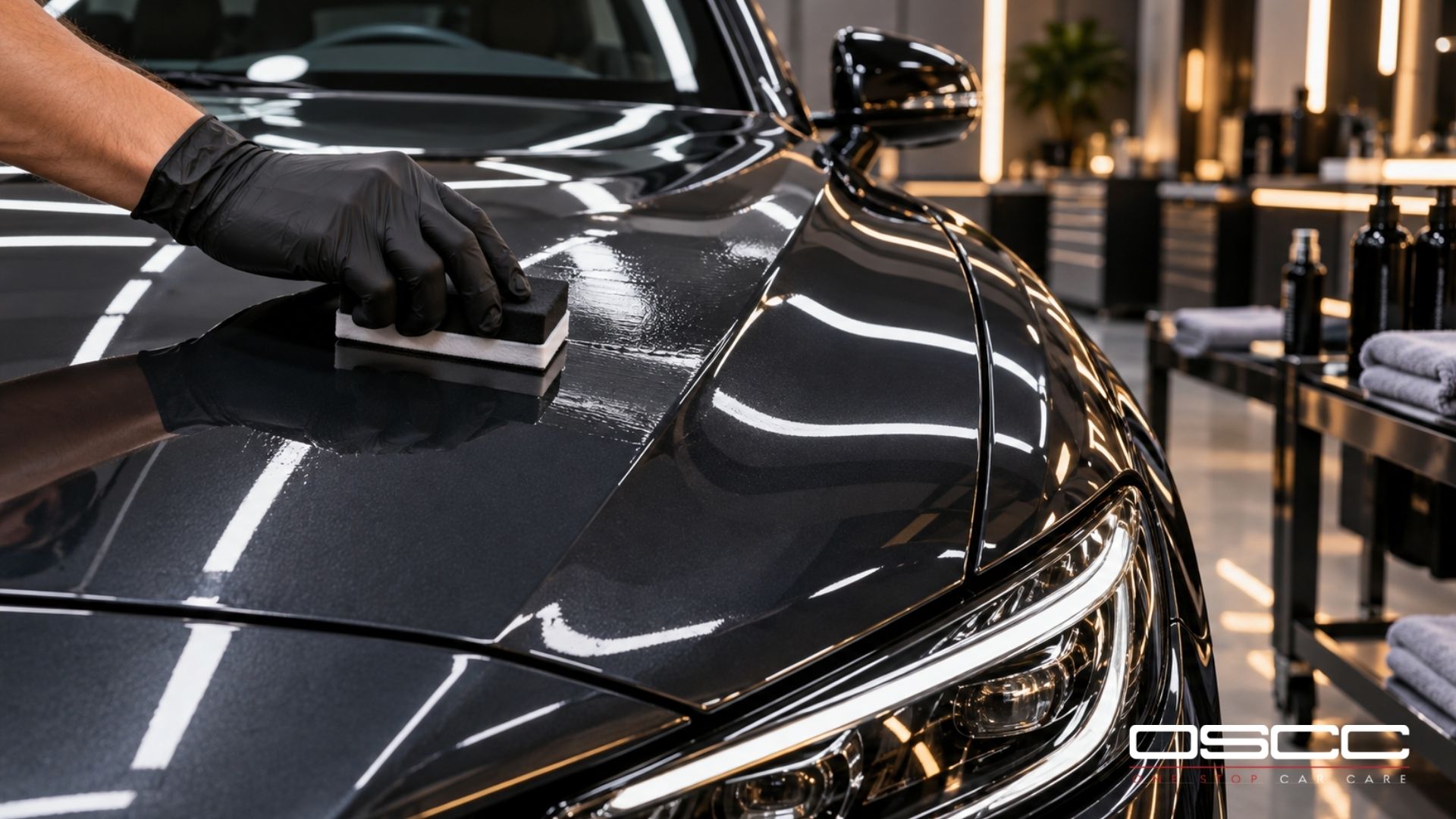
The performance of ceramic coating depends heavily on paint condition, surface preparation, correct application, and proper curing. Unlike wax, which can generally be applied and refreshed relatively easily, a professional coating is intended to remain bonded to the finish for an extended period, making preparation especially important.
A professional ceramic coating application generally involves:
- Thorough washing to remove loose dirt, grime, and surface contamination.
- Paint decontamination to address bonded particles that remain after normal washing.
- Detailed inspection to identify swirl marks, scratches, water spots, and other imperfections.
- Paint correction when appropriate to refine correctable defects before they are protected.
- Final surface preparation to remove polishing oils, waxes, or residues that could interfere with bonding.
- Controlled application and curing according to the requirements of the coating being installed.
Ceramic coating should not be confused with paint correction. Applying a coating over swirl marks doesn’t remove them. In fact, protecting an improperly prepared surface can leave you with durable protection over defects you would rather have addressed first.
That’s one of the biggest differences between applying wax and ceramic coating installation. Wax is relatively easy to remove and reapply. A professional ceramic coating is a longer-term treatment, so getting the paint into the right condition before application is worth the additional attention.
Conclusion: Should Surrey Drivers Choose Ceramic Coating or Wax?
Ceramic coating is generally the stronger choice for Surrey drivers who prioritize durable protection, easier maintenance, and fewer reapplications, while wax remains practical for owners who prefer temporary protection and regular detailing. Neither choice is universally better because the right option depends on the vehicle, how it’s driven, how long you plan to own it, your maintenance preferences, and your budget.
Surrey’s frequent rain and dirty road spray give ceramic coating a particularly practical advantage for daily-driven vehicles. Regular commuting on local streets and highways means contamination is difficult to avoid, and having a slick, hydrophobic surface can make keeping the finish clean considerably easier throughout the year.
At One Stop Car Care, we can assess your paint and help you choose protection based on what your vehicle actually needs rather than simply recommending the most extensive option. Whether you’re moving beyond traditional wax or considering coating for the first time, we’ll help you understand what makes sense for your expectations and ownership plans.
One Stop Car Care

Car detailing service in Surrey, Canada
Address:
2320 King George Blvd #1, Surrey, BC V4A 5A5, Canada
Phone:
+1 604-338-4336
Questions & answers:
Be the first to ask a question