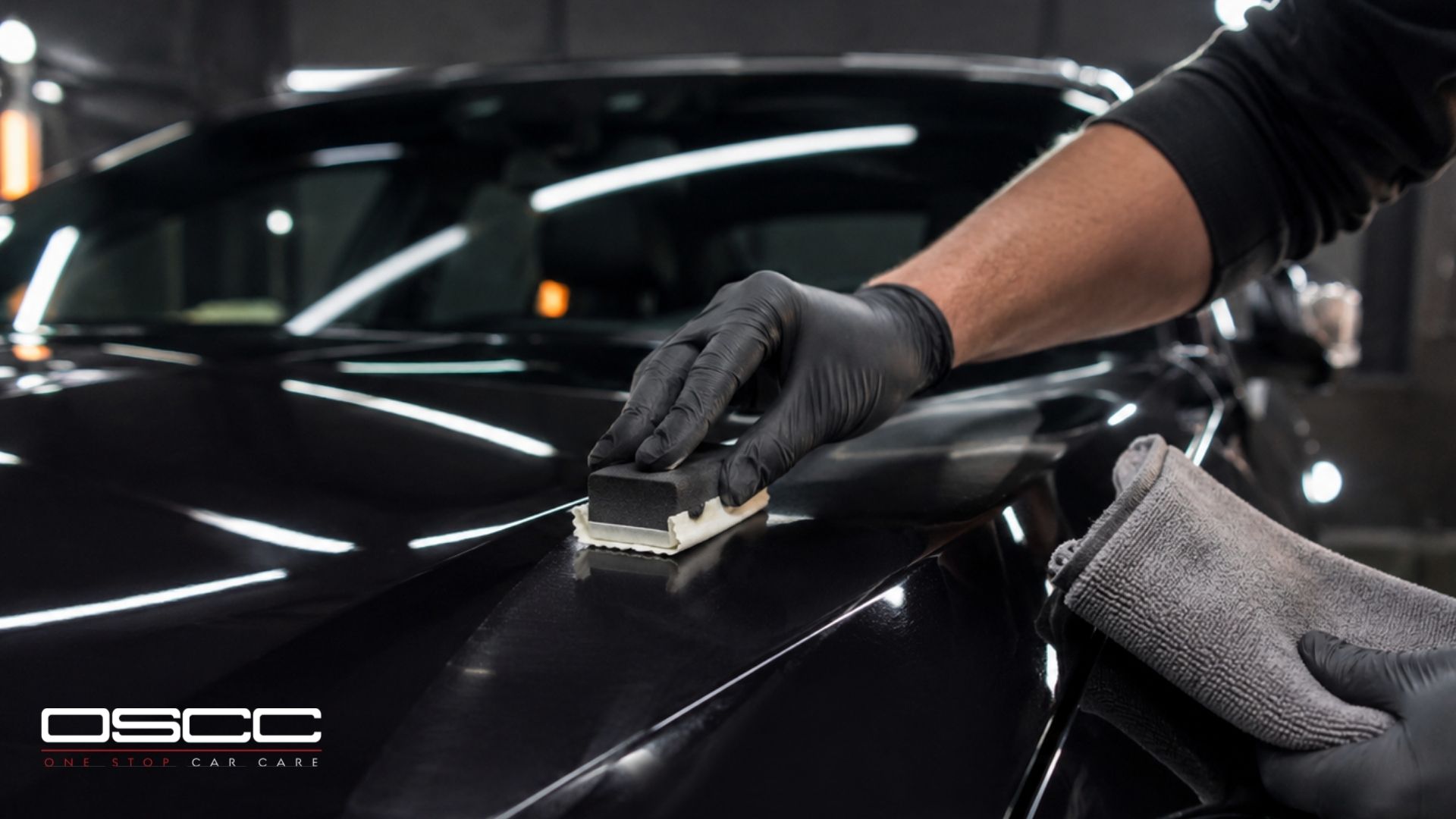
Ceramic coating can help reduce light swirl marks and surface marring by adding a harder, slicker protective layer over your vehicle’s clear coat, but it cannot make the paint scratch-proof. A professional ceramic coating application works best alongside careful washing and maintenance, giving the finish an extra line of defense rather than making it immune to physical damage.
That distinction is particularly useful for Surrey drivers. Frequent rain and dirty road spray mean vehicles often need more regular cleaning, while grit and year-round contamination can make unnecessary contact with the paint more likely. Ceramic coating helps by making that contamination easier to remove and reducing the amount of aggressive cleaning the finish needs.
Does Ceramic Coating Actually Prevent Swirl Marks?
Ceramic coating can reduce the likelihood of light swirl marks, but it cannot completely prevent them. Its value comes partly from creating a smoother, slicker surface that allows dirt and other contaminants to release more easily during washing.
Swirl marks are typically very fine scratches in the clear coat. They become particularly noticeable under direct sunlight, where they can create the familiar circular or web-like patterns that take away from an otherwise glossy finish. A scratch-resistant ceramic coating adds some resistance against minor surface marring, but its bigger advantage is helping reduce friction during routine maintenance.
With a coated vehicle, dirt generally has less opportunity to bond stubbornly to the surface. That means less scrubbing should be required to get the paint clean. Combined with safe washing techniques, this provides meaningful swirl mark protection and helps maintain the clarity of the finish.
Poor technique can still defeat that advantage. Dragging dirt across a coated panel with a contaminated wash mitt or towel can create fine scratches just as it can on an uncoated vehicle. Ceramic coating provides valuable clear coat protection, but careful maintenance remains an essential part of effective paint protection.
What Types of Scratches Can Ceramic Coating Protect Against?
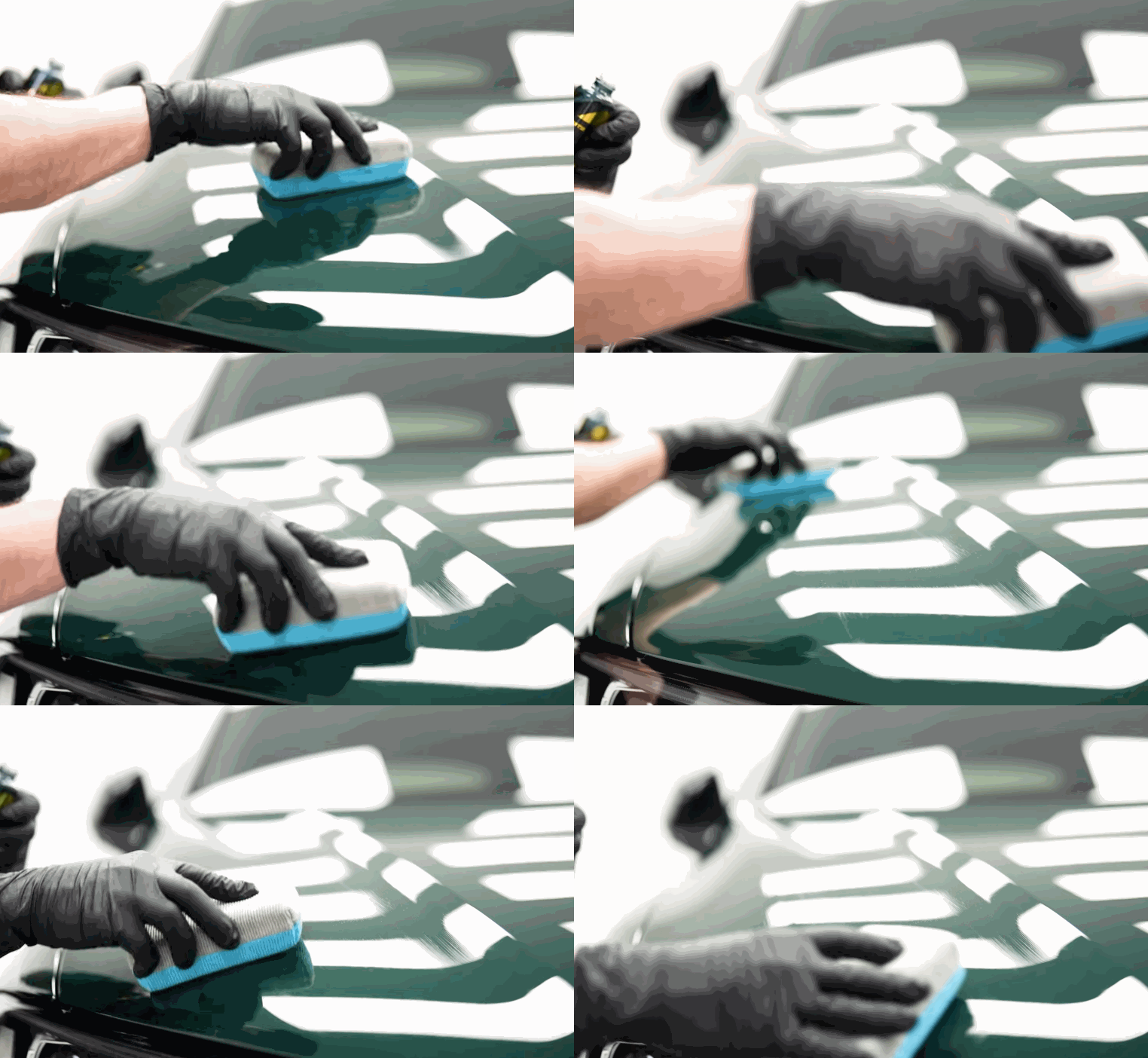
Ceramic coating provides limited protection against very light surface marring, but it isn’t thick or flexible enough to absorb significant scratches or impacts. Understanding the difference between those types of damage is important before expecting a coating to keep every mark away.
At One Stop Car Care, we’re careful about setting that expectation because terms such as ceramic coating hardness can easily be misunderstood. A hardness rating doesn’t mean keys, rocks, branches, or other hard objects can no longer damage the finish.
Here’s a practical way to separate what a coating may help with from what it isn’t designed to stop:
- Wash-induced micro-marring: A coating can provide some additional resistance, especially when safe washing methods are used.
- Very fine surface marks: The harder, slicker surface can offer a degree of scratch protection against minor contact.
- Deeper scratches: Ceramic coating cannot prevent an object with enough force from cutting into the clear coat or paint.
- Key scratches: Intentional or forceful contact can penetrate far beyond the thin protective coating.
- Rock chips: High-speed impacts require a physical barrier such as paint protection film rather than ceramic coating.
We think this distinction makes ceramic coating easier to appreciate for what it genuinely does well. Its surface protection can help reduce minor wear while improving the way the paint handles contamination, but significant paint scratches require a different level of physical protection.
Why Do Cars Get Swirl Marks Even After Ceramic Coating?
Most paint swirl marks are created by physical contact, so a coated vehicle can still develop them when dirt is rubbed across the surface during washing or drying. Ceramic coating changes how easily contamination releases from the paint, but it doesn’t eliminate the consequences of abrasive contact.
Automatic brush washes are a common example. Those brushes repeatedly contact different vehicles and can carry dirt and grit that gets dragged across the finish. A dirty wash mitt can do something similar at home, especially when it’s repeatedly used without being rinsed properly.
Dry wiping is another habit we avoid. When a dusty vehicle is wiped without sufficient lubrication, those particles are moved directly across the surface. Even contaminated microfiber towels can produce micro scratches if grit becomes trapped in the fibres.
Good ceramic coating maintenance is therefore less about buying specialized products and more about minimizing unnecessary friction. Clean wash media, proper lubrication, gentle drying, and avoiding abrasive methods all contribute to safe car washing.
The coating makes that routine easier because its slick, hydrophobic surface helps contaminants release with less effort. You still need good technique, but you shouldn’t have to fight the surface as aggressively to get it clean, and that can make a meaningful difference in how the finish ages.
How Surrey Driving Conditions Affect Coated Paint
Surrey’s wet climate doesn’t directly create scratches, but it does mean vehicles are frequently exposed to the contamination that can cause them when removed incorrectly. A hydrophobic ceramic coating is particularly useful here because it helps reduce how stubbornly water, grime, and everyday contaminants remain attached to the finish.
A commute along Highway 1 or Highway 99 can leave the lower body and rear of a vehicle covered in dirty road spray, particularly during extended periods of rain. Regular travel on King George Boulevard and Fraser Highway adds urban traffic, construction dust, grit, and other contaminants to the mix.
At One Stop Car Care, this is why we look at ceramic coating as more than a way to add gloss. For Surrey vehicles that are driven throughout the year, easier contamination removal can play an important role in maintaining the paint.
The Risk Often Comes During Cleanup
Once road film has accumulated, the temptation is to scrub harder to remove it. That’s where scratches can happen. Grit trapped in road grime becomes abrasive when it’s pushed across the paint, whether that’s with a wash mitt, sponge, towel, or automatic car wash brush.
Effective road grime protection doesn’t mean preventing every particle from reaching the car. Instead, a quality Surrey ceramic coating helps create a surface that’s easier to clean safely. Combined with careful maintenance, that reduced adhesion supports better vehicle paint protection through Surrey’s rainy months and the rest of the year.
How Ceramic Coating Application Affects Scratch and Swirl Resistance
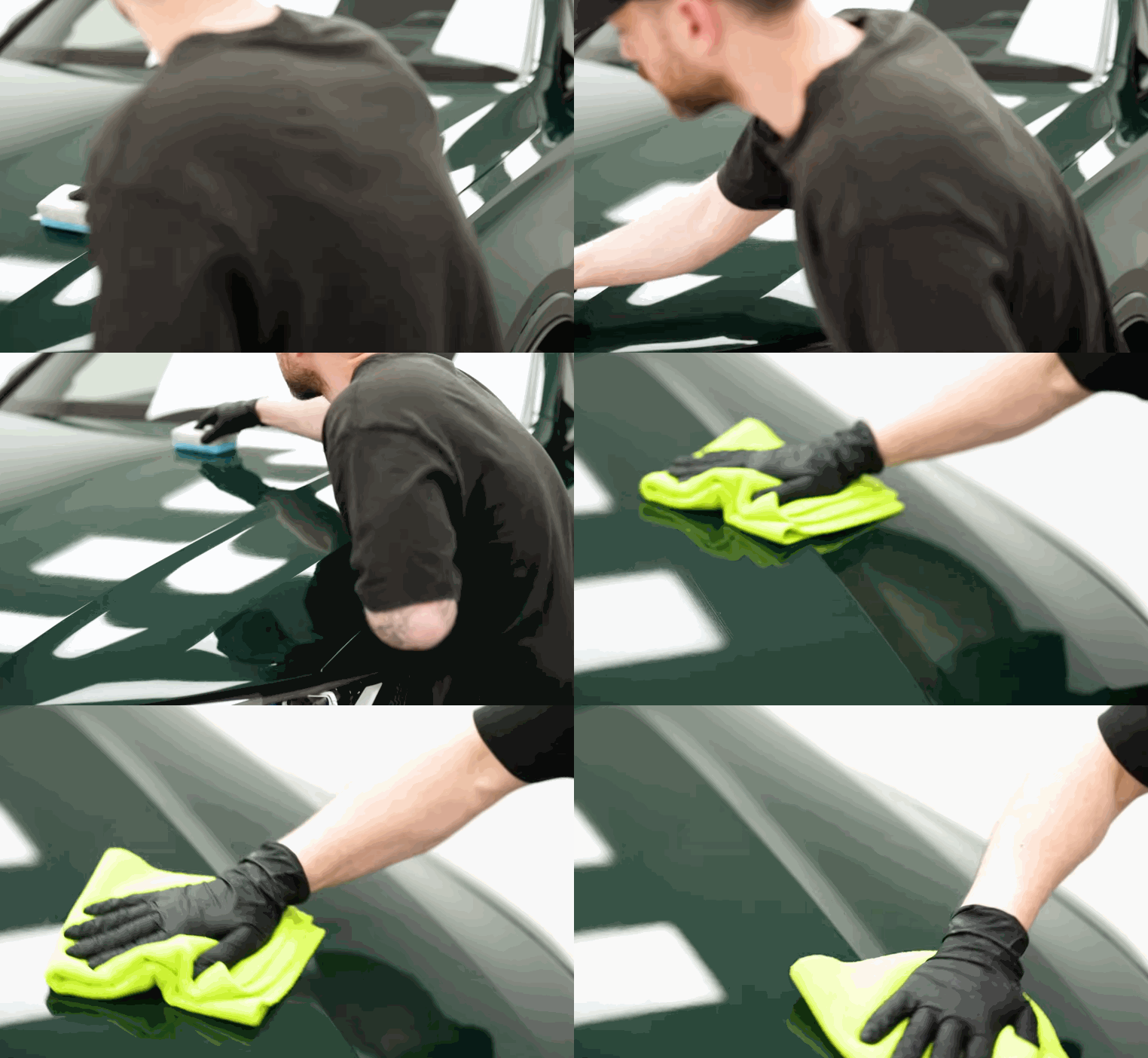
Proper preparation and ceramic coating application are essential for getting the durability, slickness, and surface resistance the coating is designed to provide. Applying a premium product over poorly prepared paint won’t compensate for contamination or defects already present underneath.
At One Stop Car Care, we treat preparation as part of a professional ceramic coating service rather than simply focusing on the coating itself. The process typically involves:
- Thorough washing: Dirt, road film, and loose contamination need to come off before more detailed work begins.
- Decontamination: Bonded particles that remain after washing are removed to leave the paint genuinely clean.
- Paint inspection: The finish is evaluated for swirl marks, scratches, oxidation, water spots, and other imperfections.
- Paint correction when appropriate: Correctable defects can be refined before they are protected.
- Final surface preparation: Polishing oils, waxes, and remaining residue are removed so the coating can bond properly.
- Application and curing: The product is applied consistently and given the appropriate conditions and time to cure.
One misconception worth clearing up is that ceramic coating installation will somehow erase swirl marks. It won’t. Ceramic coating and paint correction perform completely different jobs. Correction physically refines eligible imperfections in the clear coat, while coating protects the prepared surface afterward.
If existing swirls are left in place, a coating may actually make them more frustrating because you’re protecting a finish that already contains defects. Careful surface preparation gives the coating a better foundation and allows its gloss, slickness, and protective characteristics to work on a finish that’s worth preserving.
Ceramic Coating vs Paint Protection Film for Scratch Protection
Paint protection film provides substantially more physical protection against scratches, chips, and impacts than ceramic coating. Ceramic coating is a thin protective layer designed primarily for surface resistance and easier maintenance, while PPF creates a much thicker physical barrier between the paint and whatever contacts the vehicle.
The difference becomes clearer when you compare their strengths:
- Ceramic coating: Helps resist environmental contamination, makes washing easier, improves hydrophobic behaviour, and provides limited resistance to minor surface marring.
- Paint protection film: Absorbs more substantial physical contact and is better suited to protecting against stone chips, abrasion, and scratches.
- PPF and ceramic coating: Combines physical impact protection with easier cleaning, hydrophobic performance, and additional surface resistance.
When comparing ceramic coating vs PPF, the deciding factor should be what you’re trying to prevent. A Surrey commuter concerned about rock chips from frequent Highway 1 driving will generally get more meaningful physical protection from PPF. Someone primarily interested in easier maintenance, gloss, and contamination resistance may find ceramic coating better aligned with those priorities.
For owners looking for more comprehensive scratch protection for cars, the two don’t have to compete. Paint protection film can be applied to vulnerable panels or the entire vehicle, with ceramic coating added afterward to create a protection strategy that addresses different types of exposure.
How to Reduce Swirl Marks on a Ceramic-Coated Car
Safe maintenance is the most important factor in keeping swirl marks to a minimum after ceramic coating. The coating gives you a slicker and easier-to-clean surface, but the way you touch that surface still determines how well the finish holds up.
Good ceramic coating care starts with one simple principle: reduce unnecessary contact with the paint. When washing is necessary, use clean wash media and enough lubrication to move contamination away from the surface rather than dragging it across the finish. Quality microfiber towels should also be kept clean and reserved for appropriate detailing tasks.
Drying deserves the same attention. Aggressive towel pressure isn’t necessary, particularly when a coating is performing properly and much of the water has already sheeted or beaded away. Gentle drying techniques reduce friction and support swirl-free washing over the long term.
Regular coating maintenance also prevents heavy contamination from accumulating to the point where aggressive cleaning becomes tempting. That’s one of the practical advantages of ceramic coating: good maintenance becomes easier, not unnecessary.
Treating a coated vehicle carefully after every wash helps protect the work that went into preparing it. The combination of coating performance and sensible maintenance gives you the best chance of long-term paint preservation without expecting the coating to do something it was never designed to do.
Conclusion: Is Ceramic Coating Worth It for Scratch and Swirl Protection?
Ceramic coating is worthwhile for reducing light surface wear and making safer maintenance easier, but it should never be purchased with the expectation that it will make automotive paint scratch-proof. Its real value comes from combining limited surface resistance with several other benefits that make the finish easier to protect over time.
A quality coating adds hydrophobic performance, simplifies washing, enhances gloss, and helps the surface resist environmental contamination. Those advantages are especially practical in Surrey, where frequent rain, dirty road spray, and year-round driving can leave vehicles needing regular cleaning.
The result is less about creating an impenetrable shield and more about giving the paint a better chance of staying clean, glossy, and well maintained. Pair that protection with careful washing habits, and ceramic coating becomes a valuable part of preserving a vehicle’s finish for the long term.
At One Stop Car Care, we’ll assess your paint, discuss how you use and maintain your vehicle, and recommend protection based on what you actually need. Contact us today for a professional paint assessment and ceramic coating application in Surrey, BC, and we’ll help you build a practical protection plan for your vehicle.
One Stop Car Care

Car detailing service in Surrey, Canada
Address:
2320 King George Blvd #1, Surrey, BC V4A 5A5, Canada
Phone:
+1 604-338-4336
Questions & answers:
Be the first to ask a question