Paint correction is not always required before PPF installation, but it is often recommended when swirl marks, light scratches, oxidation, or other visible imperfections are already present. Because paint protection film preserves the surface underneath it, dealing with those defects first can create a cleaner, more refined finish that you’ll be happier to protect for years.
That distinction is especially relevant in Surrey. Frequent rain, dirty road spray, highway debris, and year-round commuting can leave their mark on paint surprisingly quickly. Before installing PPF, the real question isn’t simply whether your vehicle is new or used. It’s whether the existing finish is ready to be protected.
Why Does Paint Condition Matter Before PPF Installation?
Paint condition matters because PPF is transparent. Once the film is installed, the original finish remains visible underneath, including imperfections that weren’t addressed during PPF preparation.
A vehicle can look perfectly clean from a few feet away while still having surface issues that become obvious under proper lighting. Before installation, some of the conditions we commonly look for include:
- Swirl marks from previous washing and drying.
- Fine scratches within the clear coat.
- Mineral deposits and water spots.
- Oxidation or areas that have lost clarity.
- Embedded contamination that normal washing doesn’t remove.
Not everything on the surface requires paint correction, though. This is an important distinction. Bonded contaminants such as industrial fallout or stubborn road residue may be removable through chemical or mechanical decontamination. Swirls and other defects within the clear coat, however, typically require polishing if the goal is to reduce their appearance.
That’s why good surface preparation starts with an inspection rather than immediately reaching for a polisher. Understanding the clear coat condition allows us to separate removable contamination from actual paint defects and perform only the work the vehicle genuinely needs.
Does Every Vehicle Need Paint Correction Before PPF?
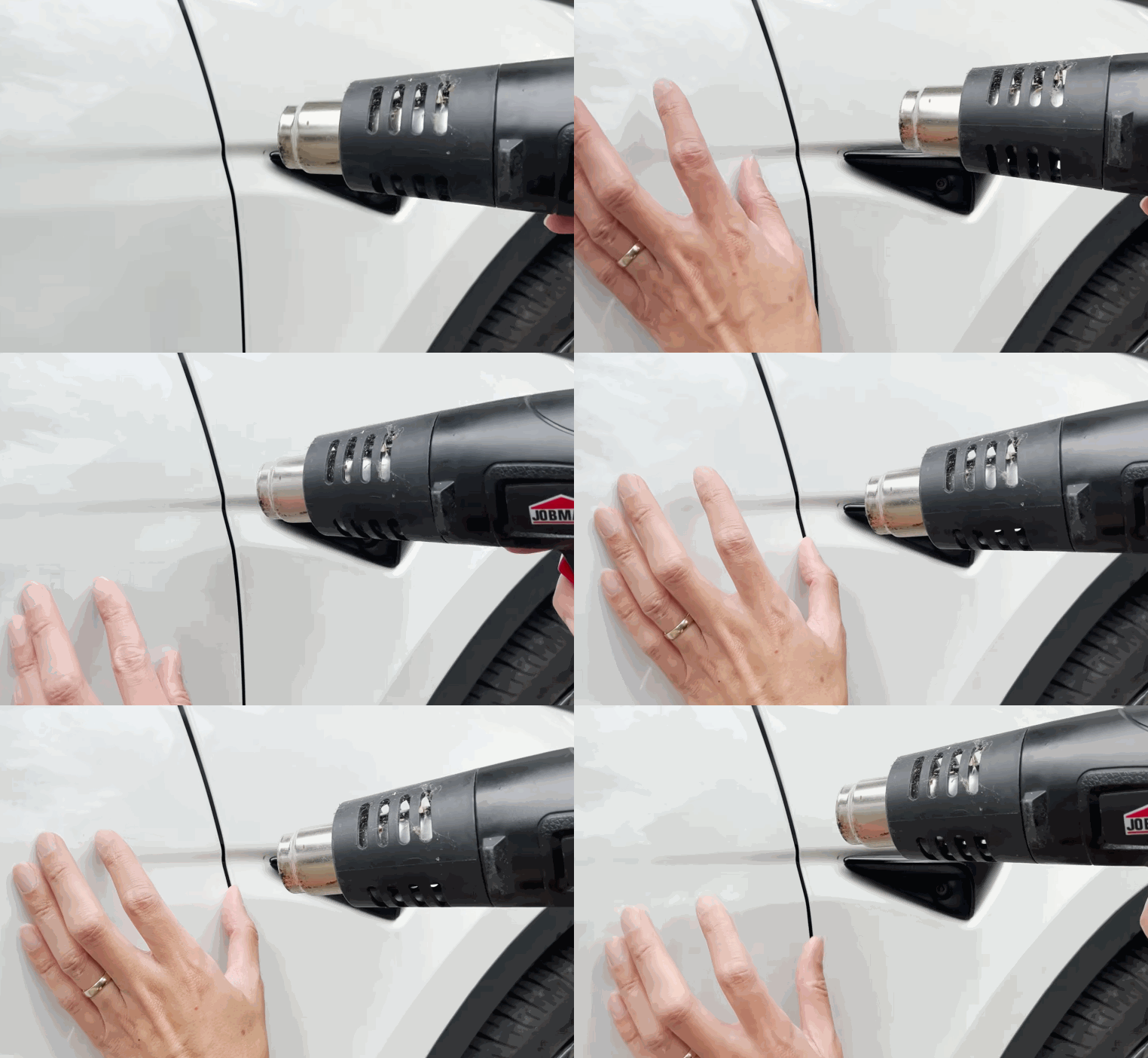
No, every vehicle does not need paint correction before receiving paint protection film. If the finish is already healthy and visually clean, thorough decontamination and preparation may be all that’s necessary before installation.
A brand-new vehicle isn’t automatically perfect, either. Transportation, dealership washing, outdoor storage, and previous detailing can leave marks even when there are very few kilometres on the odometer. At the same time, a carefully maintained used vehicle may arrive with remarkably clean paint.
At One Stop Car Care, we prefer to let the paint tell us what needs to happen next. A proper paint inspection allows us to determine whether correction will genuinely improve the final result instead of treating it as an automatic add-on.
Different Paint, Different Preparation
For a well-maintained finish, PPF installation preparation may involve washing, decontamination, inspection, and final surface cleaning. A vehicle with isolated light defects may benefit from targeted polishing. More noticeable swirling or hazing could justify professional paint correction before the film goes on.
That approach protects something besides the paint: the clear coat itself. Polishing removes a microscopic amount of clear coat, so correction should have a purpose. We don’t believe in chasing unnecessary perfection when the existing finish is already suitable for PPF.
What Paint Correction Can Fix Before Paint Protection Film
Paint correction can significantly improve many imperfections within the upper layers of the clear coat before paint protection film is applied, but it cannot repair every form of paint damage. Knowing that boundary is important because polishing and actual paint repair are two very different processes.
What Correction Can Improve
Light swirl marks are among the best candidates for swirl mark removal, particularly when they come from automatic car washes or improper hand-washing techniques. Fine scratches, mild hazing, and some oxidation can also respond well to paint polishing.
When appropriate, clear coat correction restores clarity by carefully refining the affected surface. The result is not simply more shine. You’re creating a cleaner finish before covering it with transparent protection.
What Requires More Than Polishing
A scratch that has penetrated through the clear coat cannot simply be polished away safely. The same applies to rock chips with missing paint, peeling clear coat, rust, and significant body damage. Depending on the problem, those areas may need touch-up work, refinishing, or professional body repair before PPF makes sense.
Realistic expectations matter here. Paint restoration through correction can produce a dramatic improvement, but the goal should always be to refine defects that can be safely corrected, not sacrifice a healthy clear coat trying to erase damage that requires another type of repair.
How Surrey Driving Conditions Affect Paint Before PPF
Surrey’s wet climate and heavily travelled roads can leave a vehicle contaminated or visibly marked before it ever reaches the installation bay. That’s one reason we inspect even relatively new vehicles instead of assuming that new paint is automatically ready for PPF installation.
Think about what the finish encounters during ordinary local driving. A commute on Highway 1 or Highway 99 can expose the front end to grit and airborne debris at speed, while regular trips along King George Boulevard or Fraser Highway bring plenty of dirty road spray during Surrey’s wetter months. Construction activity adds another source of dust and loose material.
Rain itself isn’t necessarily the problem. What comes with it often is. Moisture mixes with road grime, dirt, and contaminants before being thrown onto lower panels and the front end by surrounding traffic. Water that dries naturally can also leave mineral deposits behind. Over repeated trips, these exposures create paint contamination that isn’t always removed by a basic wash.
At One Stop Car Care, this local context is part of how we evaluate a vehicle before applying film. Someone doing frequent highway kilometres may arrive with very different surface conditions from a vehicle used primarily for short neighbourhood trips, even when both cars are the same age.
Effective Surrey paint protection starts by protecting a surface that’s actually ready for film. Inspecting and preparing that finish first helps ensure PPF can provide the road debris protection drivers want without unnecessarily preserving contamination or correctable imperfections underneath it.
What Happens During Paint Preparation Before PPF?
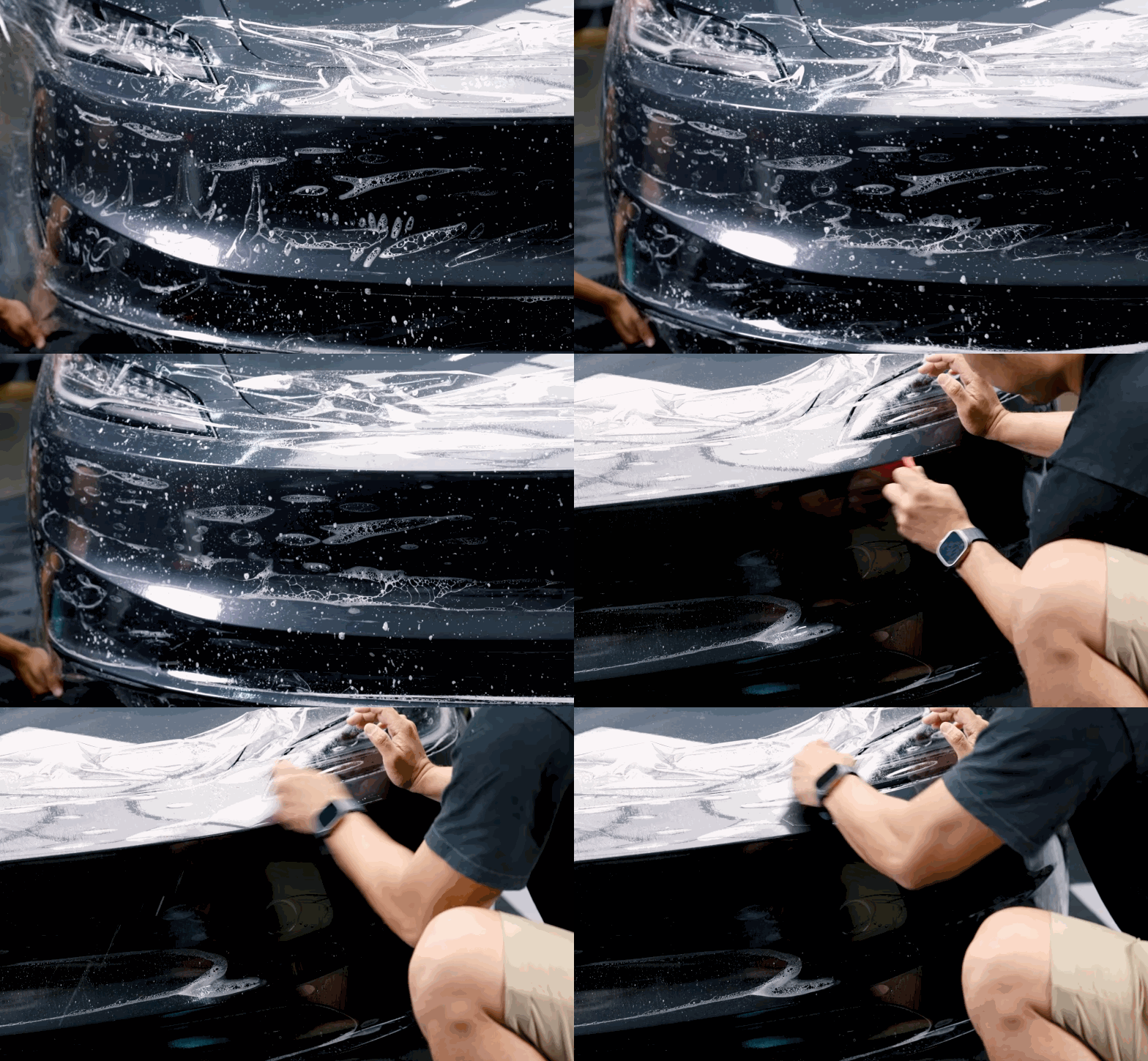
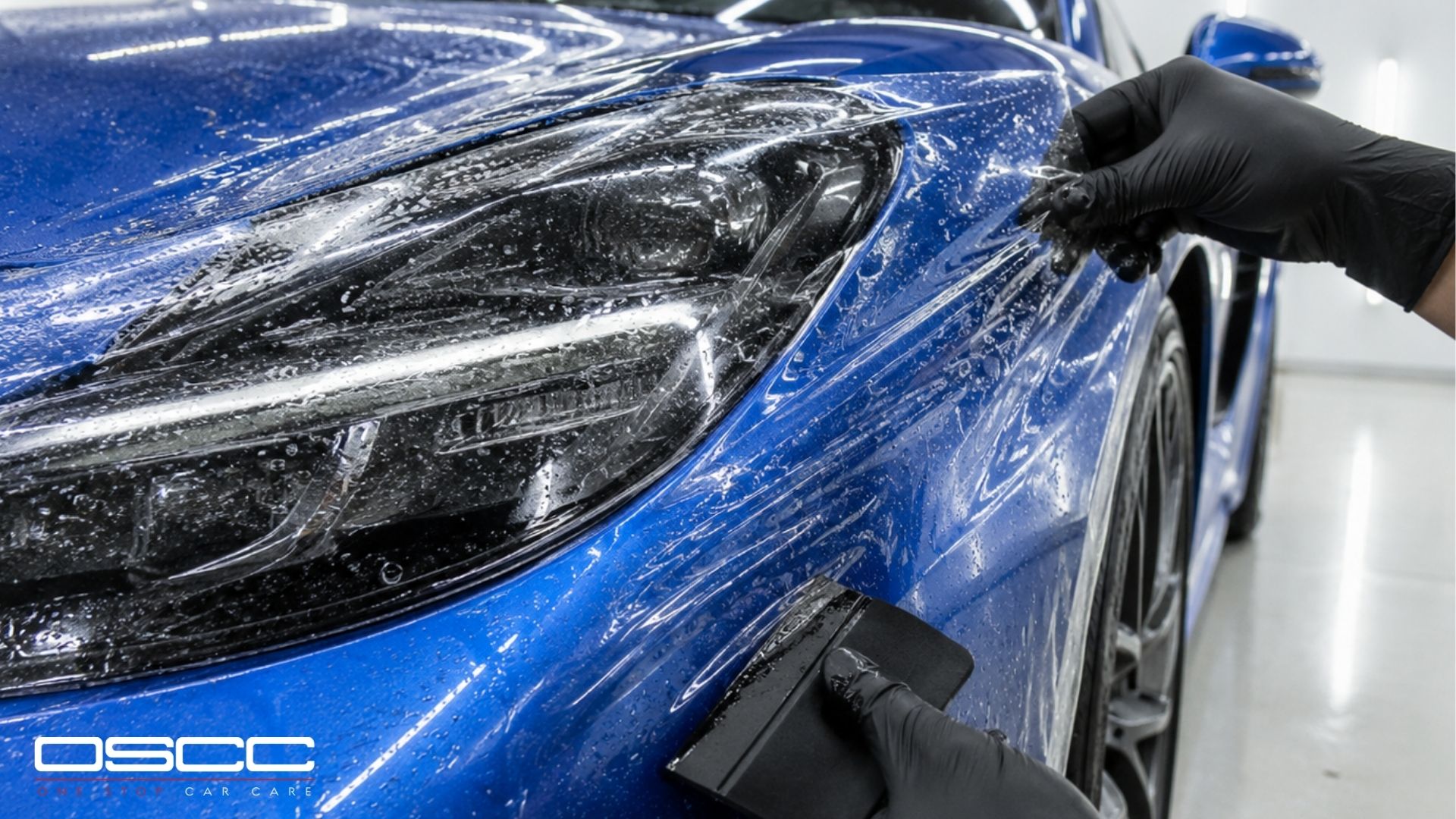
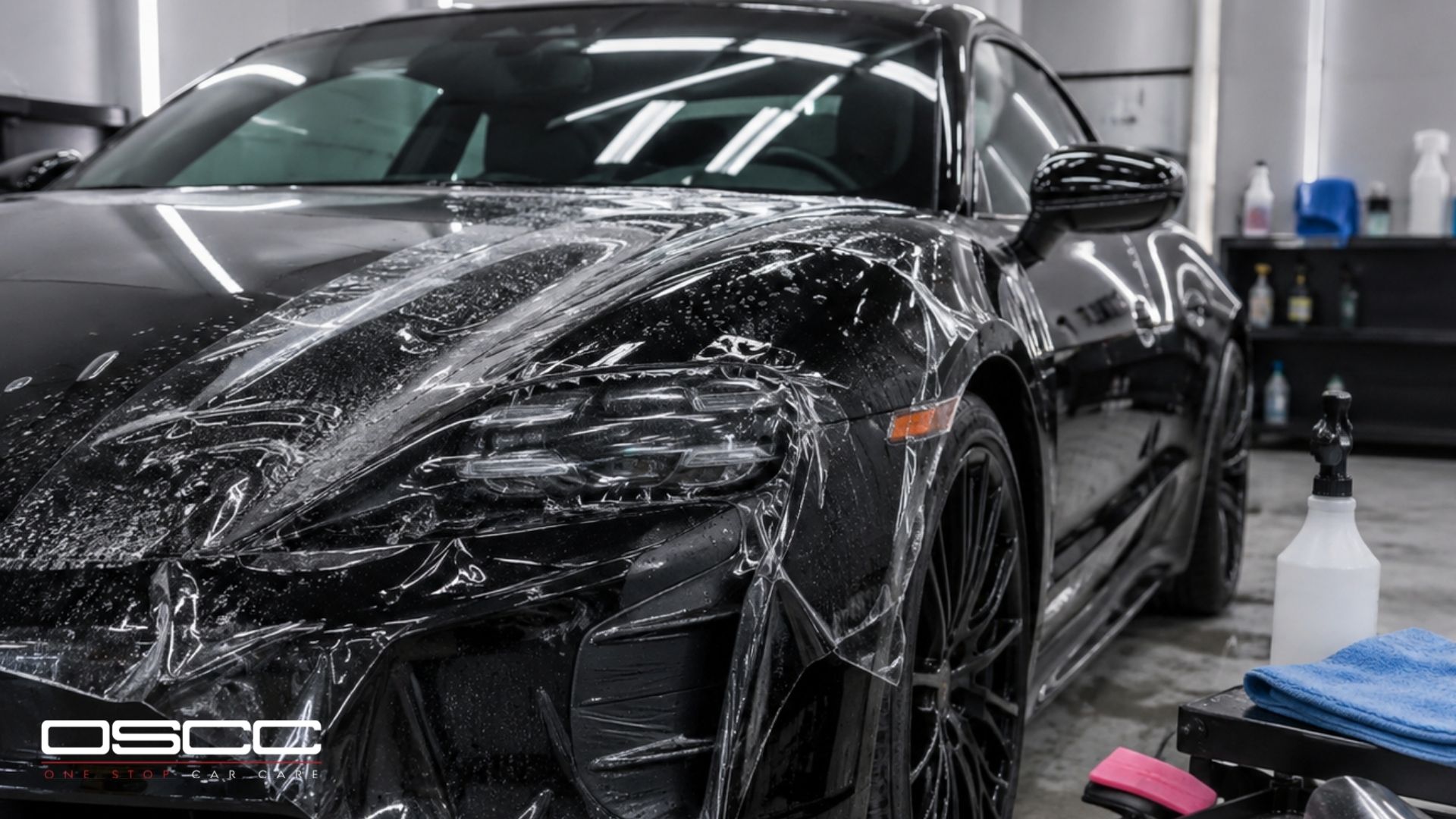
Proper PPF surface preparation involves much more than washing the vehicle and immediately applying film. The surface needs to be clean at a level that ordinary car washing doesn’t achieve, because anything left behind can affect both the finished appearance and film adhesion.
At One Stop Car Care, we treat preparation as an essential part of a professional PPF installation, not something to rush through to get the vehicle into the installation stage faster. Depending on the condition of the paint, the process typically follows these steps:
- Inspect the paint: We examine the panels for existing scratches, chips, stains, previous repairs, and other conditions that need attention.
- Wash the vehicle thoroughly: Surface dirt, road film, and loose debris are removed before more detailed preparation begins.
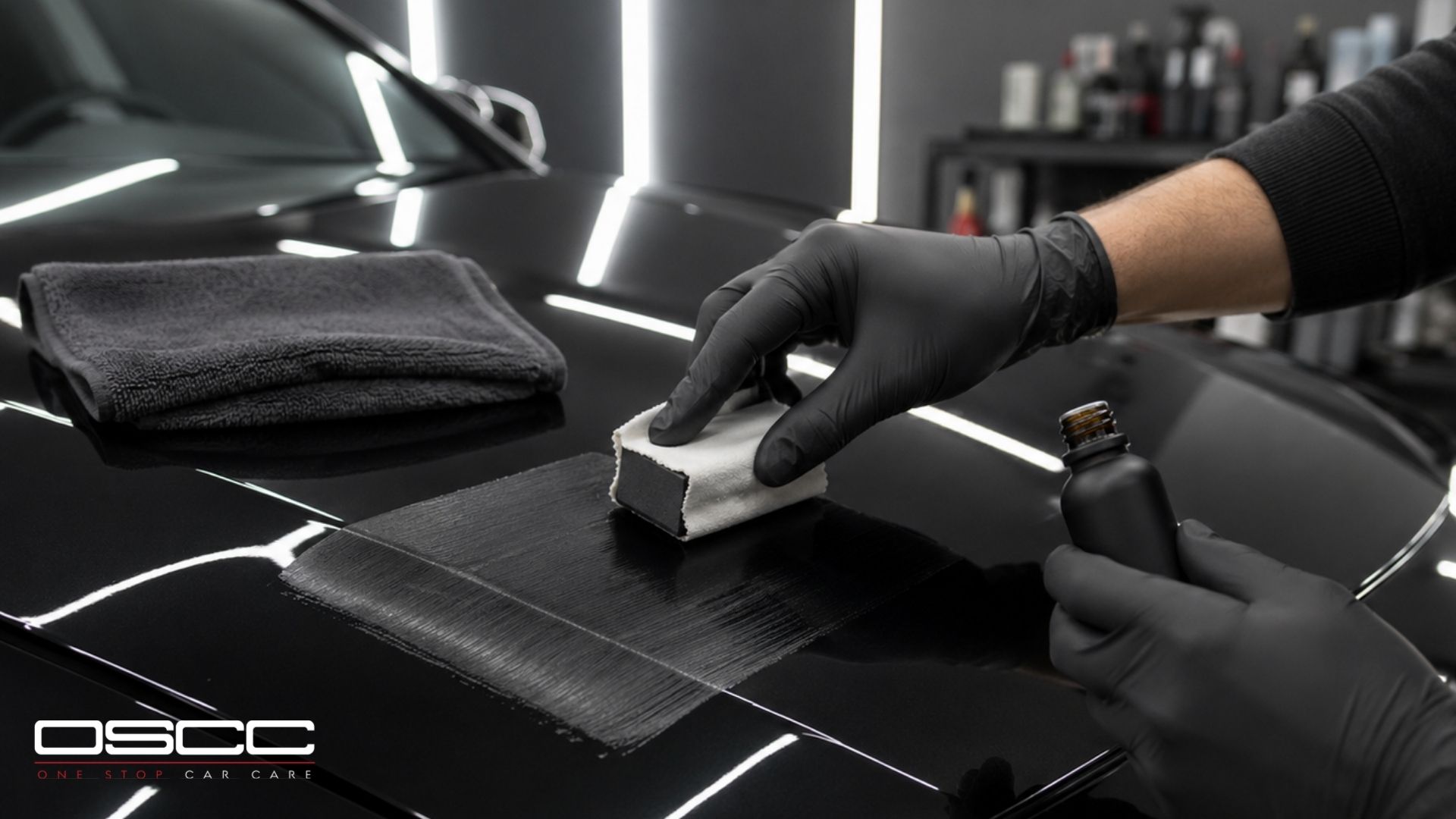
- Decontaminate the paint: Chemical and mechanical paint decontamination can remove bonded contaminants that regular washing leaves behind.
- Correct the finish when necessary: If correctable imperfections would compromise the desired result, paint correction can refine the surface before PPF is installed.
- Perform the final surface cleaning: Remaining oils, polishing residue, waxes, and other substances are removed so the film can bond to a clean surface.
That final step is particularly important. Wax, detailing products, polishing oils, or invisible residue can interfere with the adhesive even when the paint looks spotless to the eye. Taking preparation seriously gives the film a better foundation and helps produce the clean, consistent finish we’re looking for when protecting a vehicle.
Is Paint Correction Worth the Extra Step Before PPF?
Paint correction before PPF is worth considering when visible imperfections would otherwise remain noticeable beneath the film. It isn’t automatically necessary for every vehicle, and we don’t believe it should be presented as a mandatory upsell simply because someone has decided to install PPF.
The value depends heavily on what you’re starting with and what you expect from the finished vehicle.
New Vehicles
New paint may need little or no correction if the finish arrives in excellent condition. However, dealership washing, transportation, and previous handling can sometimes introduce light marks that are worth addressing before protection.
Daily Drivers and Used Cars
A daily-driven vehicle may have accumulated swirl marks and fine scratches without having severely damaged paint. Selective correction can make sense here, particularly if you’re investing in long-term paint protection and want the surface underneath the film to look its best.
Enthusiast and Long-Term Ownership Vehicles
For an owner who pays close attention to paint clarity or plans to keep the vehicle for many years, refining correctable defects beforehand can make the investment more satisfying. Because PPF is transparent, cleaner paint underneath generally means cleaner-looking PPF results above it.
The important part is knowing when to stop. Healthy clear coat has value, and polishing removes a small amount of it. The objective isn’t to chase every microscopic mark regardless of cost. It’s to achieve the best reasonable surface for protection while preserving as much original, healthy clear coat as possible.
Does a Brand-New Car Need Paint Correction Before PPF?
A brand-new vehicle does not automatically need paint correction before PPF, but new paint should still be inspected carefully before installation. Low mileage doesn’t guarantee a flawless finish, and the condition of the clear coat matters more than how recently the vehicle left the dealership.
Before reaching its owner, a new car may have been transported by truck or rail, stored outdoors, washed at the dealership, or handled several times during delivery preparation. Along the way, the paint can pick up light swirl marks, water spots, adhesive residue, or minor surface contamination.
In these cases, the approach should match what is actually present:
- Clean paint with no meaningful defects: Decontamination and normal PPF surface preparation may be enough.
- Minor isolated imperfections: Light or targeted polishing can refine specific areas without unnecessarily correcting the entire vehicle.
- Visible swirls or surface defects: More comprehensive paint correction may produce a noticeably cleaner finish before the film is applied.
For Surrey drivers buying a new vehicle and planning an early PPF installation, having the paint inspected before protection is a smart move. Paint protection film can then preserve a properly prepared factory finish instead of covering imperfections that could have been addressed beforehand.
Conclusion: Should You Correct the Paint Before Installing PPF?
Paint correction should be performed before PPF when the existing finish has correctable imperfections that would noticeably affect the final appearance. If the paint is already clean, healthy, and in excellent condition, proper preparation may be all that’s needed without extensive correction.
That’s why inspection matters more than following a blanket rule. Surrey vehicles can arrive with very different paint conditions depending on mileage, previous maintenance, outdoor exposure, and time spent commuting on local highways. Evaluating the actual finish tells us much more than the model year or odometer ever could.
At One Stop Car Care, we’ll inspect your paint, explain what we see, and recommend the level of preparation that makes sense for your vehicle. If you’re considering paint protection film, contact us today for a professional paint inspection, personalized PPF recommendations, and expert PPF installation in Surrey, BC.
One Stop Car Care

Car detailing service in Surrey, Canada
Address:
2320 King George Blvd #1, Surrey, BC V4A 5A5, Canada
Phone:
+1 604-338-4336
Questions & answers:
Be the first to ask a question